
A loud bang from the garage, followed by a door that suddenly refuses to open — that’s what a broken garage door spring sounds and feels like. It’s startling, inconvenient, and one of the most common reasons homeowners search for urgent repair advice.
Here’s what you need to know upfront: repairing a broken garage door spring is not something you should do yourself. The springs in your garage door system operate under extreme tension and are responsible for more serious injuries than almost any other household component. This guide explains what happens when a spring breaks, how to identify the failure, what to do immediately, how professionals handle the repair, what it costs, and how to prevent it from happening again.
While you wait for your spring repair, it’s important not to operate the door — instead, read our guide on garage door manual locking methods to keep your home secure without putting yourself at risk.
Why Garage Door Spring Repair Is Not a DIY Job
Garage door springs are wound under enough tension to counterbalance a door weighing anywhere from 60 to over 150 kilograms. When that tension releases — whether from breakage or mishandling — it can cause severe lacerations, crushed fingers, broken bones, or worse. Globally, garage door systems account for tens of thousands of injuries each year, and spring-related incidents are among the most serious.
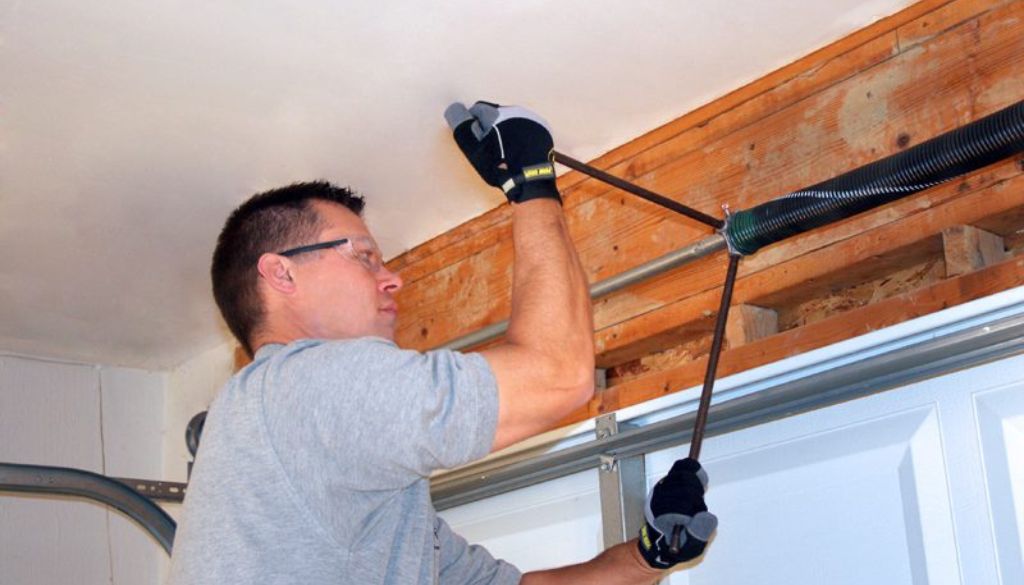
Professional technicians use specialised winding bars, vice grips, and safety equipment to manage this tension. They’re trained to calculate the correct spring size, wire diameter, and number of wind turns for a specific door. Getting any one of those variables wrong creates a door that’s dangerously unbalanced. This is not a job where a YouTube tutorial and confidence will keep you safe.
What Garage Door Springs Actually Do
Your garage door opener doesn’t lift the door — the springs do. The opener motor provides the driving signal and a relatively small amount of force to move the door along its tracks, but the springs supply the counterbalance that offsets the door’s full weight. Without functioning springs, the opener would need to generate enough power to lift the entire door on its own, which it was never engineered to do.
This is why a broken spring has cascading consequences. The door becomes dangerously heavy to move manually, the opener motor strains and risks burnout if someone keeps pressing the button, and a partially open door may drop without warning if the spring snaps while it’s raised. If your spring has just failed and you’re unsure what to do first, our guide on what to do when a garage door spring breaks covers the immediate safety priorities.
Types of Garage Door Springs
The type of spring your door uses affects how it fails, how it’s repaired, and what replacement costs. For a full comparison of each system, see our article on garage door spring types.
Torsion Springs
Torsion springs mount horizontally on a metal shaft above the door opening. They store energy by twisting (torque) and release it to assist the door’s movement. Most modern residential garage doors in Australia use torsion springs because they deliver smoother, more controlled operation and generally last longer. A standard single-car door typically requires one torsion spring, while heavier double doors often use two.
Extension Springs
Extension springs run along the horizontal tracks on both sides of the door and work by stretching and contracting. They’re more common on older or lighter doors and cost less to replace than torsion springs. However, they provide less even force distribution, wear out faster, and can become dangerous projectiles if they break without safety cables fitted.
Enclosed and Specialty Systems
Some manufacturers use proprietary systems — Wayne Dalton’s TorqueMaster, for example, encloses the torsion spring inside a tube. These require brand-specific tools and parts, making professional service non-negotiable.
How to Tell If a Garage Door Spring Is Broken
A broken spring typically makes itself obvious, but knowing the specific signs helps you communicate the problem accurately when you call a technician.
Visual Signs
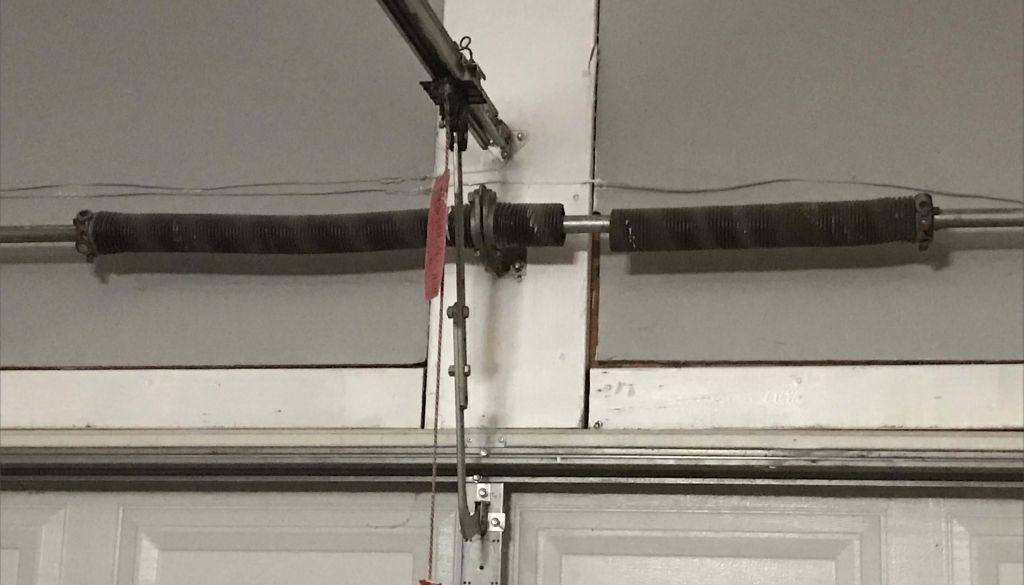
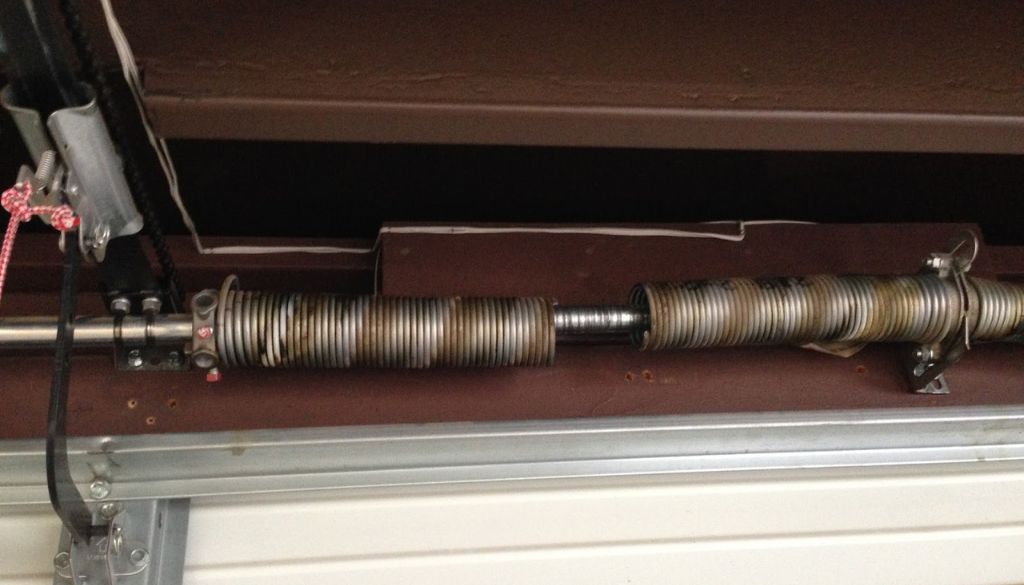
The clearest indicator is a visible gap in the torsion spring coil — a distinct separation where the continuous coil has snapped apart. With extension springs, you may see the spring hanging loose or split into two pieces along the track. Other visual clues include slack lift cables that have slipped off their drums, and door panels that appear bowed, sagging, or sitting unevenly.
Functional Symptoms
If the door won’t open at all, or the opener hums and strains without moving the door, a broken spring is the most likely culprit. The door may open partway before stopping, or feel impossibly heavy when you try to lift it manually with the opener disengaged. Jerky, uneven movement where one side lifts faster than the other often indicates one spring in a dual-spring system has failed.
What Causes Garage Door Springs to Break
Cycle Life and Wear
Every spring has a finite lifespan measured in cycles — one cycle equals one full open-and-close operation. Standard torsion springs are rated for approximately 10,000 cycles. If your household opens the garage door four times a day, that translates to around 1,460 cycles per year — giving the spring a working life of roughly seven years. High-cycle springs rated for 20,000 to 25,000 cycles are available and well worth the investment for busy households. Our guide on when to replace garage door springs covers the warning signs that your springs are approaching end of life.
Weather, Rust, and Maintenance Neglect
Metal fatigue accelerates in cold weather as steel contracts and becomes more brittle, which is why spring failures spike during winter. Rust is equally damaging — corroded coils lose structural integrity and are far more likely to snap without warning. Lack of lubrication increases friction and heat during each cycle, compounding the wear. Regular application of silicone-based spray or white lithium grease is one of the simplest and most effective ways to extend spring life. Our guide on how to properly lubricate garage door springs explains the best products and techniques.
Immediate Steps When a Spring Breaks
What to Do
Stop using the door immediately. Do not press the opener button again. If the door is closed, leave it closed. If it’s partially open, do not walk or stand beneath it. Unplug the garage door opener or switch off the circuit breaker to prevent anyone from accidentally activating the system. Keep children and pets away from the garage until a technician arrives.
What NOT to Do
Do not attempt to lift the door manually unless you fully understand the weight involved — a door without spring counterbalance can weigh over 100 kg and will not stay open on its own. Do not pull the emergency release cord if the door is open or raised, as it may drop under its own weight. Do not attempt to unwind, adjust, or remove any spring. Do not try to reattach cables that have come off their drums.
How Professionals Repair a Broken Spring
A qualified technician follows a precise, systematic process. The door is first secured in the closed position using track clamps to prevent any movement. The opener is disconnected and the broken spring is carefully unwound using winding bars before removal from the torsion shaft.
The technician selects a replacement spring matched to the door’s weight, height, and track configuration. The new spring is mounted onto the shaft, wound to the precise number of turns calculated for your door, and locked into position. Lift cables are inspected and replaced if worn. The door is then tested for balance — when disconnected from the opener and lifted manually to waist height, a properly balanced door should hold its position without drifting up or down. For more on what proper balance looks like, see our guide on how to balance a garage door.
Why Both Springs Are Replaced Together
If your door runs on two torsion springs and only one has snapped, any reputable technician will recommend replacing both. The surviving spring carries the same age and cycle wear as the one that failed, meaning it’s statistically likely to break soon. Replacing both at once ensures even tension, balanced operation, and eliminates the cost of a second callout shortly after the first.
How Long Garage Door Springs Last
Standard torsion springs last approximately 7,000 to 10,000 cycles — roughly 5 to 7 years of average residential use. High-cycle torsion springs rated for 20,000+ cycles can push that to 12 to 15 years. Extension springs generally have a shorter lifespan, typically 5,000 to 10,000 cycles depending on maintenance and load. Regular lubrication, rust prevention, and annual professional inspections are the most effective ways to get the maximum life from your springs.
Can You Prevent Garage Door Spring Failure?
You can’t prevent springs from eventually wearing out — they’re consumable components with a set number of cycles. But you can significantly delay failure and avoid the surprise of an unexpected snap.
Lubricate your springs every three to four months with a silicone-based spray or white lithium grease to reduce friction and prevent rust. Visually inspect the coils every few months for gaps, rust spots, or uneven stretching. Have a professional technician conduct a full spring and cable inspection at least once a year — they can spot springs nearing end of life and recommend planned replacement before a failure occurs.
If your door is starting to feel heavier, move unevenly, or the opener seems to be working harder than usual, those are signs the springs are weakening. Planned replacement is always safer, cheaper, and less disruptive than emergency repair after a break.
Garage Door Spring Repair Costs
| Repair Type | Typical Cost (AUD) |
|---|---|
| Single torsion spring replacement | $200 – $350 |
| Torsion spring pair replacement | $300 – $500 |
| Extension spring pair replacement | $150 – $300 |
| High-cycle spring upgrade | $350 – $600 |
| Emergency / after-hours callout | $50 – $150 additional |
Costs depend on the spring type, door weight and size, your location, and whether cables, drums, or other components need replacing at the same time. Always request a quote before work begins.
When Replacement Makes More Sense Than Repair
If your door is fitted with old extension springs and you’re facing a second or third replacement, it’s worth discussing a torsion spring upgrade with your technician. Torsion systems last longer, provide smoother operation, and are safer — making them better value over the life of the door.
Frequently Asked Questions
Can I repair a broken garage door spring myself?
No. Spring replacement involves extreme tension and specialised tools. It’s one of the most dangerous household repairs a person can attempt and is responsible for thousands of injuries each year. Always hire a qualified technician.
What happens if I keep using the door with a broken spring?
The opener motor will strain against the unsupported door weight, risking motor burnout, stripped gears, bent tracks, and cable failure. The door may also drop without warning, creating a serious injury hazard.
Should both springs be replaced at once?
Yes. If one has broken, the other has the same age and wear. Replacing both ensures balanced operation and avoids a second failure and service call in the near future.
How long do garage door springs typically last?
Standard torsion springs last 5 to 7 years with average use (roughly 10,000 cycles). High-cycle springs rated for 20,000+ cycles can last 12 to 15 years. Extension springs generally have a shorter lifespan.
Does home insurance cover a broken garage door spring?
Most standard policies don’t cover wear-and-tear components like springs. However, if the spring failure caused secondary damage — such as a door falling on a vehicle — that damage may be claimable depending on your policy.
Need Your Broken Spring Repaired? Impact Doors Can Help
A broken garage door spring isn’t something to delay or attempt yourself. The longer you leave it, the greater the risk of secondary damage to your opener, cables, and door panels — and the higher the eventual repair bill.
At Impact Doors, Jarred and the team handle torsion and extension spring replacements across the Moreton Bay Region and North Brisbane. We carry the right springs, tools, and replacement parts to complete most repairs in a single visit. We replace both springs as standard practice, test your door’s balance before we leave, and use quality components from brands like B&D, Centurion, and Steel-Line.
Heard a loud bang from the garage? Door won’t budge? Call Impact Doors on 0431 625 191 or request a free on-site quote — we offer same-day emergency callouts to get your garage door safe and working again.
