
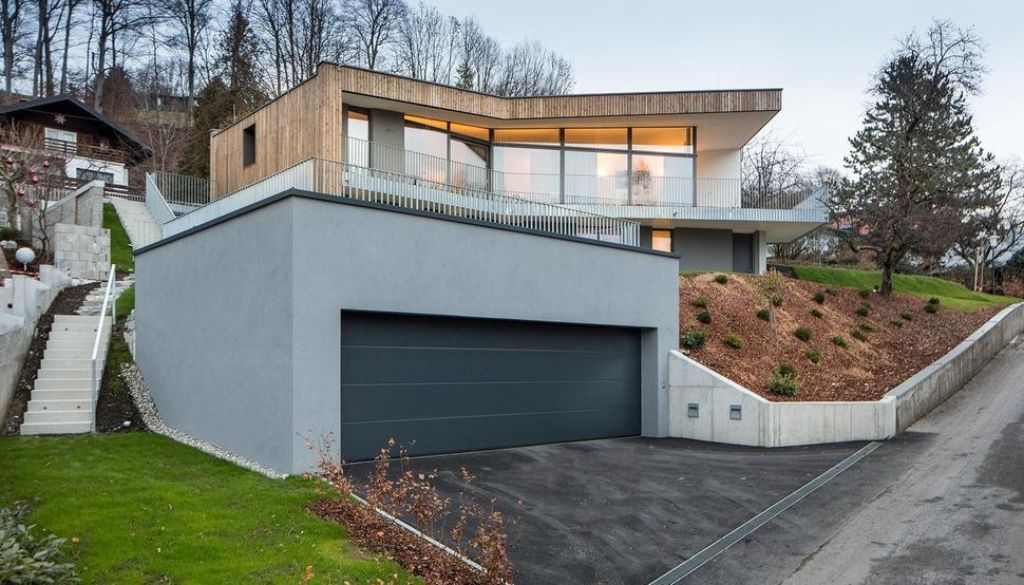
A garage door that refuses to sit flush with the floor is more than an eyesore — it creates real problems for Queensland homeowners, from water flooding in during a downpour to pests sneaking through the gap overnight. If your driveway or slab has even a modest slope, the standard installation approach simply won’t cut it. This guide walks you through everything you need to know: why slopes cause trouble, the best door types to handle uneven terrain, installation solutions, and how the team at Impact Doors can help you get a perfect seal every time.
What Is a Sloped Garage Floor?
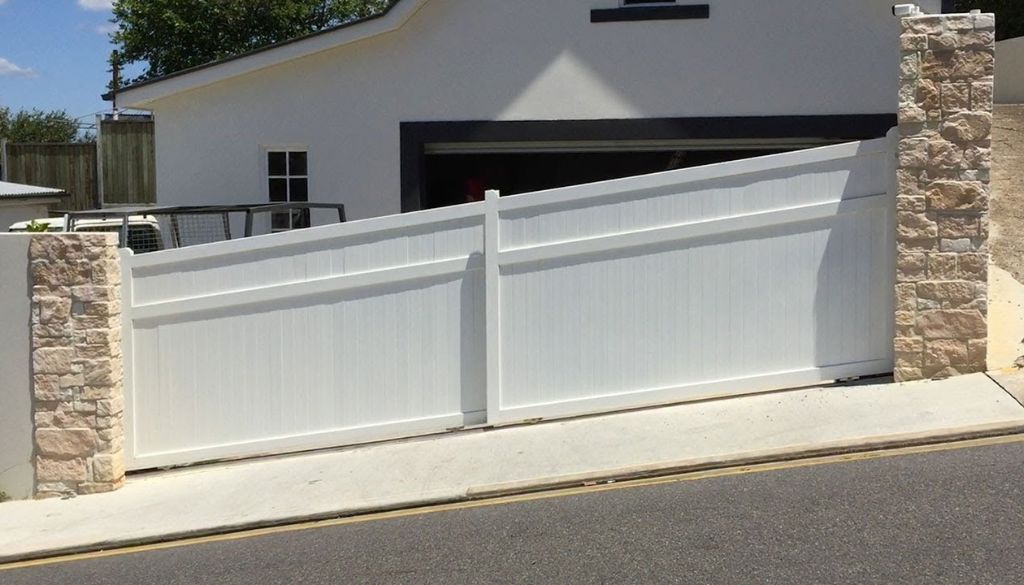
A sloped garage floor — or sloped driveway — is any garage entry surface that isn’t level from side to side or front to back. In Australian residential builds, driveways are commonly graded to direct stormwater away from the structure. The result is a floor that drops several centimetres across the width of the opening.
Technically, any slope greater than about 10 mm across the width of the door qualifies as “uneven” when it comes to garage door installation. Once a slope exceeds 25–30 mm, standard bottom seals and weatherstripping can no longer compensate, and purpose-built solutions are required.
Common Causes of Sloped Garage Floors
Slopes don’t appear by accident. The most common causes include:
- Drainage design: Building codes in Queensland require driveways and garage aprons to channel water away from the home. A deliberate fall of 1:40 to 1:20 is typical.
- Structural settling: Concrete slabs shift over time. Tree roots, soil movement, and subgrade erosion all contribute to gradual slope changes after the original pour.
- Architectural choices: Split-level homes and properties built on hillside blocks often have garages that open onto a naturally angled surface, making some degree of slope unavoidable.
Problems Caused by a Garage Door on a Sloped Floor
When a garage door meets a sloped floor, the two surfaces only make contact at one point — usually one corner. Everything else is a gap. That gap creates a cascade of practical problems.
Signs Your Garage Door Is Affected by a Sloped Floor
- Visible daylight under one side of a closed door
- Water pooling inside the garage after rain
- Leaves, debris, and small pests entering through floor-level gaps
- Draughts and noticeable temperature change near the garage floor
- Rubber bottom seal wearing unevenly or pulling away on one side
Performance Issues You May Notice
Beyond the gap itself, a mismatched floor creates mechanical stress throughout the door system:
- Off-track movement: The door tends to drag on the low side, gradually pulling it away from the vertical track.
- Uneven friction: One roller set works harder than the other, causing premature wear on rollers, hinges, and cables.
- Opener strain: The garage door opener struggles when one side of the door drags. To understand how openers perform under stress, see Best Home Garage Door Openers Reviewed.
Can You Install a Garage Door on a Sloped Floor?
Yes — a garage door can absolutely be installed on a sloped floor or driveway, provided the right adjustments are made from the outset. The critical factors are accurate measurement, the correct door type, and customised track or seal configurations. Attempting to force a standard installation onto a sloped surface typically leads to the performance problems outlined above within the first year of use.
Measuring the Slope of Your Garage Floor
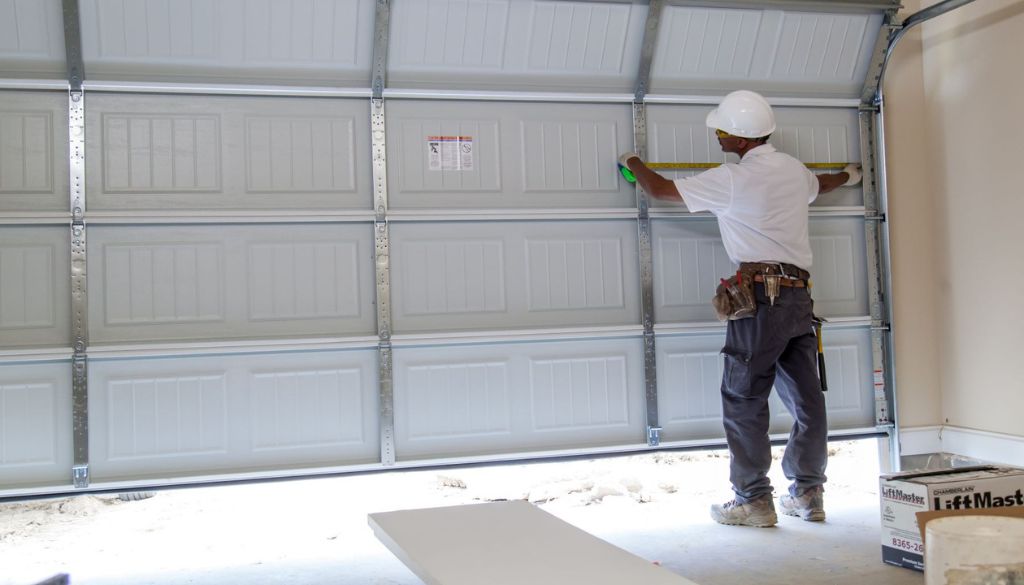
Before any installation or repair work, you need to know exactly how much slope you’re dealing with. Here’s a straightforward method:
- Place a long spirit level across the full width of the garage opening at floor level.
- Measure the gap between the level and the floor at the low side.
- Divide that gap (in mm) by the total width of the opening (in mm) to get the slope ratio.
- For example: a 25 mm drop across a 2,400 mm opening gives a ratio of 1:96, which is manageable with the right bottom seal.
- Alternatively, use a digital level app on your smartphone — most will display degrees and percentage grade simultaneously.
Share these measurements with your installer before any product is selected. The slope dictates which door type and seal configuration will work best.
Best Garage Door Types for Sloped Floors
Not all garage door designs handle an uneven floor equally. The table below compares the most common options:
| Door Type | Slope Suitability | Key Advantage | Best For |
|---|---|---|---|
| Sectional | High | Flexible panel sections follow adjusted tracks | Most Australian residential garages |
| Roller | High | Compact vertical roll — no swing-out clearance needed | Sloped driveways with limited headroom |
| Tilt/Up-and-over | Low–Medium | Single rigid panel — minimal clearance on slopes | Mild slopes only; not recommended for steep terrain |
| Side-hinged | Medium | Swings open sideways — floor slope less critical | Garages with severe front-to-back slope |
Sectional Garage Doors
Sectional doors are the most widely installed type in Australian homes, and for good reason when slopes are involved. Each horizontal panel section is independent, meaning the door can flex slightly as it travels along custom-adjusted tracks. The bottom panel can also be fitted with an adjustable bottom seal — a flexible rubber strip that compresses unevenly to fill the gap where the door meets the sloped floor.
Roller Garage Doors
Roller doors coil vertically into a drum above the opening, which means there’s no panel swinging outward or lifting away from the floor during operation. This compact movement makes them well-suited to sloped driveways. A custom-cut rubber threshold can be bonded to the floor at the lowest contact point to create a near-perfect seal without modifying the door itself.
Other Possible Garage Door Types
Side-hinged doors open outward from a central hinge, so the floor slope affects them differently — the door doesn’t need to travel along the floor at all, making them practical for garages with a pronounced front-to-back slope. Tilt-up (up-and-over) doors are the least slope-friendly option since their single rigid panel must clear the floor consistently across the full width when swinging open.
Installation Solutions for Sloped Garage Floors
Adjusting Garage Door Tracks
The most effective structural fix is customising the vertical track height on each side of the door. By raising the track on the low side (or lowering it on the high side), the door hangs level even though the floor below it is not. This approach is standard practice for experienced installers but requires precise measurement — a few millimetres of error at the track translates to a visible gap or binding at floor level.
Track Configurations for Sloped Installations
- Vertical track adjustment: Raising one side of the vertical track to compensate for a side-to-side slope — the most common fix for Australian residential garages.
- Low-headroom track: Used when ceiling clearance is limited, typically on garages with sloped rooflines adjacent to the opening.
- High-lift track: Installed on steep-sloped driveways where the door needs to clear a greater vertical distance before moving to horizontal travel.
Leveling the Garage Door Foundation
In some cases, the more cost-effective solution is to address the floor itself rather than modify the door:
- Concrete grinding or levelling compound: Raising the low spot of the floor at the door line so the bottom seal makes consistent contact across its full width.
- Adjustable bottom brackets and shims: Shims under the door track brackets fine-tune the hanging position without major structural work.
- Rubber threshold strips: A bespoke-cut rubber threshold bonded to the floor creates a raised contact surface that fills the gap under the door without any modification to the door itself.
Best Bottom Seals for Sloped Garage Floors
One area where competitors provide very little guidance is the bottom seal itself — yet it’s often the simplest and most cost-effective fix for moderate slopes.
- Standard T-profile rubber seal: Clips into a retainer on the bottom of the door. Works well for slopes up to around 15 mm across the width.
- Adjustable bottom seal retainer: The retainer can be angled, allowing the seal to follow the floor contour rather than pressing flat.
- Custom-cut rubber threshold: Bonded directly to the floor under the door line, a bespoke threshold fills the gap from below rather than relying solely on the door seal from above. Ideal for slopes of 20–40 mm.
- Brush-style seal: A bristle strip that flexes easily on uneven surfaces, commonly used on side-hinged doors or where debris accumulation is a concern.
Preventing Water and Drainage Issues
A sloped driveway that falls toward the garage is a dual problem: not only does the door struggle to seal, but water naturally flows toward the opening. Even the best bottom seal will eventually fail if water pressure is building up against it every time it rains.
Drainage Solutions
- Channel drain (strip drain): A linear drain installed across the driveway just in front of the garage door catches runoff before it reaches the opening. This is the single most effective fix for garages prone to water ingress on sloped driveways.
- French drain: A subsurface perforated pipe in gravel redirects groundwater away from the garage slab.
- Regrading: Reshaping the driveway or apron to create a slight crown or change the fall direction away from the door.
- Roof gutters and downspouts: Ensuring roof drainage is directed well away from the garage apron prevents additional water load on an already-stressed drainage path.
Cost Considerations
Understanding the cost range helps homeowners prioritise the right fix:
- Rubber threshold strip: $50–$150 in materials; simple DIY installation for minor slopes.
- Adjustable bottom seal replacement: $80–$200 depending on door width; a qualified technician can complete this in under an hour.
- Track adjustment: $150–$350 for a professional adjustment; no new parts required in most cases.
- Channel drain installation: $400–$1,200 depending on length and driveway material.
- Full custom installation on a steep slope: $2,500–$5,500+, depending on door type, track configuration, and any concrete work required.
For minor gaps, a DIY threshold or seal replacement is manageable. For anything involving track modification, spring adjustment, or concrete work, professional installation is strongly recommended — incorrect spring tension in particular carries a real safety risk.
Garage Door Maintenance for Sloped Floors
Doors installed on slopes experience slightly higher mechanical stress than those on level floors, so maintenance frequency matters more. The checklist below covers the key tasks:
| Task | Frequency | Notes |
|---|---|---|
| Lubricate rollers, hinges & tracks | Every 6 months | Silicone or lithium-based spray |
| Check track alignment | Every 6 months | Look for bowing, gaps, or contact points |
| Inspect spring tension | Annually | Call a professional — high tension risk |
| Test weatherstripping & bottom seal | Every 3 months | Replace if gaps allow light or water through |
| Check sensor alignment | Monthly | Both sensors must face each other without obstruction |
| Tighten all hardware | Annually | Check brackets, hinges, and roller bolts |
| Test door balance | Every 6 months | Disconnect opener — door should hold halfway |
Regular lubrication is particularly important for sloped installations — see our full guide on garage door spring lubrication for step-by-step instructions. For a broader maintenance framework, our garage door preventive maintenance tips article covers all the essentials in one place.
When to Call a Garage Door Professional
Some slope-related problems are well within the reach of a motivated DIYer. Others genuinely require a trained technician — not because the task is complicated, but because the consequences of getting it wrong are serious.
Call Impact Doors when:
- The slope is greater than 25 mm across the door width and a standard seal isn’t cutting it
- The door is coming off track or binding during operation
- Spring tension needs adjustment to compensate for the slope-related load imbalance
- You’re planning a new installation and the driveway has a visible grade
- Water is entering the garage and previous seal attempts haven’t held
The Impact Doors team services Moreton Bay, North Brisbane, and surrounding Queensland suburbs. Owner Jarred Turner and his crew bring hands-on experience with all door types across all terrain conditions. Call 0431 625 191 or request a quote online to book an on-site assessment — same-day and emergency callouts are available.
Frequently Asked Questions
Can a garage door be installed on a sloped driveway?
Yes. With the correct track configuration, door type, and bottom seal, a garage door can be installed on virtually any residential slope. The key is accurate pre-installation measurement and choosing an installer experienced with uneven terrain.
Why is there a gap under my garage door on one side?
A one-sided gap almost always points to a floor or driveway that slopes from one side to the other. The door hangs level, so it only contacts the high side of the floor. Solutions include adjusting the track height on the low side or installing a custom-cut rubber threshold.
What type of garage door works best on a slope?
Sectional and roller doors are the best choices. Sectional doors allow track height adjustments on each side, while roller doors eliminate floor contact issues during operation. Tilt-up doors are least suitable for steep slopes.
Do I need to level my garage floor before installing a door?
Not necessarily. For moderate slopes (under 25 mm), track adjustments and custom seals are usually sufficient. For more severe slopes, a combination of a small concrete levelling pour and track adjustment is more cost-effective than trying to level the entire slab.
How do professionals fix uneven garage door gaps?
Professionals typically combine two or three techniques: adjusting the vertical track height to compensate for the slope, fitting an adjustable or custom-profile bottom seal, and — where water ingress is an issue — installing a channel drain across the door line.
