
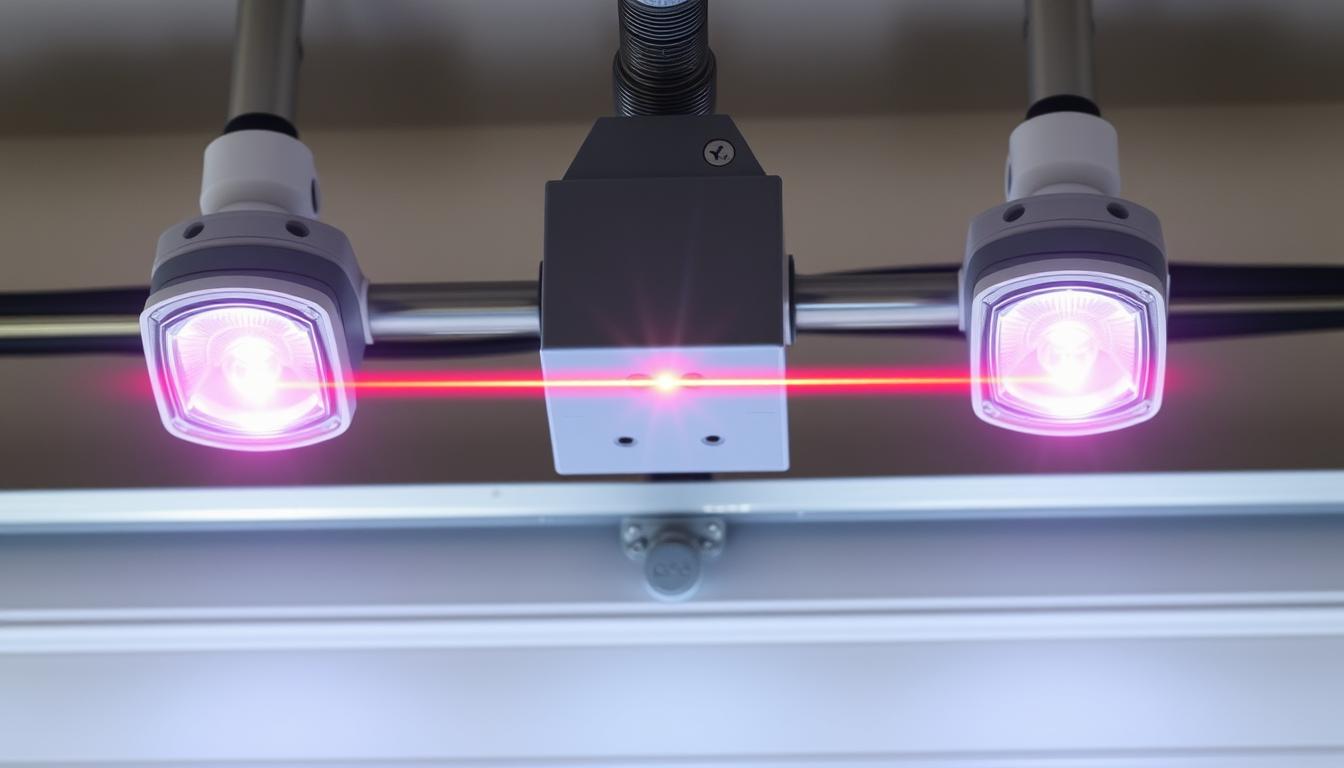
Your garage door is more than just an entrance—it’s a safety shield for your home. Those small devices near the base? They’re infrared sensors, quietly working to prevent accidents. Imagine a beam you can’t see, stretching across the doorway. If something breaks it while the door closes, the system stops immediately. This simple tech has been a lifesaver since becoming standard in the 1990s.
Modern setups often handle garage doors weighing over 500 pounds. Without proper detection from the door sensor, that’s like a car dangling above your driveway. Dust, bumps, or loose wires can disrupt the beam of the garage door opener. When that happens, your door might reverse unexpectedly or refuse to close. Frustrating, right?
This guide breaks down how these safety sensors operate. We’ll explore components like photo eyes and opener systems. You’ll learn to test alignment with a cardboard trick and fix common issues related to closing garage doors. Real-world examples from Raynor’s experience show why maintenance matters. After reading “how garage door sensors work”, be sure to visit our complete resource on sensor replacement costs and signs so you know when to call in a professional.
Key Takeaways
- Infrared beams create an invisible safety barrier near the base of your door.
- Misaligned garage door sensors can cause unexpected reversals or failure to close.
- Most modern garage door openers automatically stop if the beam is interrupted.
- Regular cleaning prevents dust buildup affecting sensor performance.
- Professional checks are recommended for wiring or opener issues.
Introduction to Garage Door Sensors
Every year, countless accidents are prevented by an unseen beam of light. These small devices mounted near your entryway form a silent safety net, blending into daily life until they’re needed most. Let’s explore why they matter—and how they’ve shaped modern home security. If your sensors are malfunctioning and your door won’t close, read our complete guide on bypassing a garage door sensor safely to understand your options and the risks involved.
The Role of Sensors in Garage Door Safety
Picture this: a child chases a ball toward a closing garage door. Before contact, the system halts. This split-second reaction relies on infrared beams between two “eyes”. If broken, the signal tells the door opener to reverse immediately. It’s not just about convenience—it’s about preventing crushed limbs, damaged vehicles, or worse.
Since the 1990s, these garage door sensors have been mandatory in Australia. Take the 1993 update to UL 325 standards, which forced manufacturers to include automatic reversal features in their door closing systems. Local rules followed, like the 1994 Building Code amendment requiring sensor installation in all new homes. The result? A 72% drop in door-related injuries reported by Australian hospitals between 1995-2005.
History and Regulatory Standards in Australia
Early automatic doors lacked protection, leading to tragic accidents. The 1990s changed everything. Updated UL 325 rules demanded contactless safety systems, pushing infrared tech into the mainstream. Down under, Standards Australia adopted similar measures through AS/NZS 60335.2.95, mandating sensor pairs on all motorised garage doors by 2003.
Today, even minor sensor alignment issues can trigger failsafes. Dust on lenses? The door reverses. Wiring frayed? It won’t close. This strictness reflects decades of refinement—proof that simple tech can have life-saving impact on door safety sensors.
How Do Garage Door Sensors Work?
Ever noticed those little boxes near your garage’s floor? They’re not decorations – they’re lifesavers. These devices create an invisible safety net using light you can’t see. Here’s how they team up to protect what matters most.
Infrared Beam Fundamentals
One unit constantly sends out infrared light – like a tiny torch. Its partner across the doorway acts as a receiver. When aligned properly, they form a continuous beam at shin height. Break this connection, and magic happens: your garage door stops mid-close or reverses immediately.
Think of it like an electronic handshake. The sending sensor says “Can you hear me?” through light pulses. If the receiver answers “Loud and clear,” everything works. No response? The system assumes something’s blocking the path – maybe your dog, a toolbox, or even strong sunlight reflecting off a car bumper.
Line of Sight and Signal Interruptions
These devices need clear visibility. A pebble nudged by the wind, cobwebs, or a crooked bracket can disrupt communication. That’s why sensors sometimes act up after storms or DIY projects. Even 2mm of misalignment – about the thickness of a coin – can trick them into seeing ghosts.
Most modern setups have indicator lights. Steady green? All good. Blinking or off? Time for a check. Gently wipe the lenses with a soft cloth – fingerprints matter more than you’d think. If issues persist, try the cardboard test: place a small object in the door’s path during closing. No stop? Call a pro immediately.
Regular maintenance keeps this silent guardian reliable. After all, that beam works 24/7 – even when you’re not watching. Simple care ensures it’s always ready to say “Not today” to potential accidents.
Key Components and Infrared Beam Technology
Have you ever wondered what stops your garage door from closing on your bike or toolbox? The answer lies in two clever components working together. These silent guardians use light and reflection to create an invisible safety net.
The Photo Eye System Explained
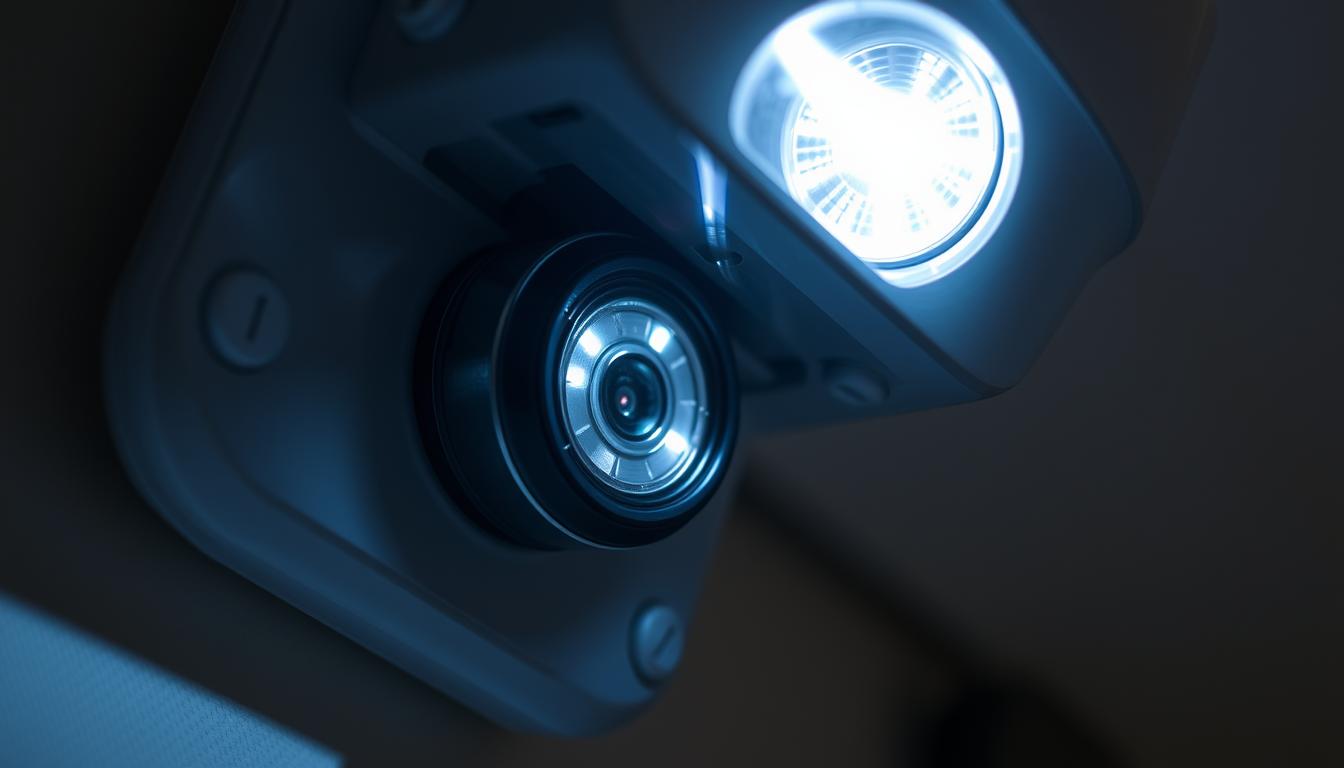
Photo eyes form the core of most modern setups. One unit sends infrared signals while its partner receives them. Positioned 5-8cm above the ground, this pair creates a beam across the doorway’s base, crucial for effective garage door sensors.
Dust accumulation causes 40% of sensor failures according to industry reports. A simple wipe with a microfiber cloth often solves issues. But if your door refuses to shut completely, misaligned brackets might be bending the photo eyes’ view, impacting door safety sensors.
Understanding Retroreflective Sensors
Newer models combine sender and receiver in one housing. They bounce signals off special reflectors – like how bicycle lights work at night. This design reduces wiring but needs precise alignment for optimal operation.
Raynor’s 2022 case study showed retroreflective units fail 23% less often than traditional pairs. However, spider webs near reflectors can trick the system. Seasonal checks prevent these false alarms and ensure your door safety remains intact.
Remember: Both types need clear sightlines. Trim plants near sensors and secure loose brackets. Your door’s safety depends on these quiet heroes spotting obstacles before trouble starts, preventing potential damage.
Testing and Troubleshooting Your Garage Door Sensors
What if your safety system needs a check-up? Let’s explore easy tips to verify everything’s working as it should. Grab a cardboard box and follow these simple checks—no tools required. If your garage door starts beeping, it’s often due to an issue with the sensors, like being blocked or misaligned. The beeping is a safety alert to let you know the sensors need attention, ensuring your door operates safely. Regular maintenance can prevent these issues.

Spotting Alignment and Lens Issues
Start with the cardboard test. Place a small box in the door’s path and try closing it. If the garage door sensors system doesn’t reverse immediately, your door sensors might need attention. Look for blinking lights—steady green means “all clear,” while amber flashes signal trouble.
Dirty lenses cause 1 in 3 false alarms. Wipe them gently with a soft cloth dipped in mild soapy water. Avoid harsh chemicals—they can cloud the plastic. Realign brackets by loosening the screws slightly, then adjust until both units face each other squarely, ensuring proper garage door safety.
How Do Garage Door Sensors Work?
| Common Problem | What Happens | Quick Fix |
|---|---|---|
| Blinking sensor lights | Beam interruption or misalignment | Adjust brackets until lights turn solid |
| Door reverses randomly | Dust on lenses or small obstructions | Clean lenses with microfiber cloth |
| No response during tests | Damaged wires or power issues | Inspect cables for chew marks/kinks |
Inspecting Wires and Clearing Paths
Check where cables meet the wall. Rodents love chewing these wires—look for frayed ends or exposed copper. Gently tug connections to confirm they’re secure. I once found a family of geckoes nesting behind a sensor—their movement triggered false alerts!
Clear leaves, tools, or toys from the sensor’s line of sight. Even tall grass can block the beam. Test three times—consistency matters. If issues continue after these steps, contact a licensed technician. Your door safety is worth the extra care.
Maintenance Best Practices and Safety Considerations
Keeping your entry system reliable starts with simple habits. Like changing smoke alarm batteries, sensor care prevents bigger issues. A well-maintained setup lasts longer and responds faster when it matters most, enhancing overall door safety.
Routine Cleaning and Testing Procedures
Wipe sensor lenses monthly with a dry microfiber cloth. Dust buildup blurs the infrared beam – think smudged glasses. Test responsiveness by waving a broom handle through the beam during closing. No pause? Time for adjustments.
Mark your calendar for quarterly checks:
| Task | Frequency | Tool Needed |
|---|---|---|
| Lens cleaning | Monthly | Microfiber cloth |
| Alignment test | Every 3 months | Spirit level |
| Full system check | Annually | Multimeter |
Compliance with UL 325 and Local Safety Guidelines
Australian standards require Impact Doors professional inspections every 2 years. Technicians verify beam height (10-15cm above ground) and reversal force (max 400N). After severe storms or accidental bumps, perform a quick alignment check using a carpenter’s level to ensure your garage door sensor is functioning properly.
Did you know? Proper garage door opener installation includes sensor calibration. DIY fixes might void compliance certificates – better safe than sorry when it comes to door safety sensors.
Practical Tips for Long-Term Efficiency
Secure loose brackets with locktight-treated screws on the side of your garage door. Check wire connections where cables enter walls – corrosion loves moisture. Trim plants near sensors; spider plants grow faster than you’d think!
Remember:
- Replace sun-bleached lenses – UV damage clouds infrared transmission and affects your safety sensor’s performance
- Use compressed air to clear insect nests from housing units to ensure the garage door sensor remains unobstructed
- Test after power outages – voltage spikes can reset safety settings and affect how your door close function operates
When in doubt, call a licensed pro. Some tasks need expert hands – like replacing frayed wires or adjusting opener limits. Your family’s safety deserves that peace of mind.
Conclusion
Those unassuming boxes by your driveway hold immense power. Their infrared beams form an invisible safety net, stopping heavy doors before accidents occur. Like smoke detectors for your entryway, they work silently until needed most.
Regular care keeps this system reliable. A quick wipe of lenses monthly prevents dust buildup. Seasonal alignment checks ensure beams connect perfectly. Following smart home integration guidelines during upgrades maintains compliance with modern standards.
Remember – consistent maintenance protects both property and people. If lights keep blinking after cleaning, or wires show damage, call a Impact Doors professional. Some tasks need expert hands. Your family’s safety deserves that certainty.
Thanks for investing time in understanding these quiet guardians. Simple habits today prevent headaches tomorrow. Stay safe, and keep those beams shining bright!
FAQ
Why are safety sensors required on modern garage doors?
Safety sensors play a crucial role in garage door safety by preventing doors from closing if an object, person, or pet blocks the infrared beam. Since 1993, Australian Standards AS 5039 and international regulations like UL 325 mandate their use to reduce crushing risks and improve home safety.
How do infrared beams detect obstructions?
Sensors emit an invisible beam between two units mounted near the ground. If anything breaks this beam while the door moves downward, the system stops and reverses the door immediately. It’s like an electronic safety net!
What causes garage door sensors to malfunction?
Common issues include misaligned brackets, dirty lenses, damaged wires, or sunlight interfering with the beam. Even spiderwebs or leaves blocking the sensors can disrupt signals. Regular checks help avoid most problems. Here are some tips to maintain your safety sensors effectively.
How can I test if my sensors are working properly?
Try closing the door and waving a broomstick through the beam path. If the door doesn’t reverse, check alignment marks, clean lenses with a soft cloth, and ensure no debris blocks the units. Persistent issues? Call a licensed technician.
Do sensors need maintenance even if my door works fine?
Yes! Wipe lenses monthly to remove dust, test responsiveness quarterly, and inspect wiring annually for wear. Proper care extends sensor life and ensures reliable operation. Think of it like changing smoke alarm batteries – better safe than sorry. Following these tips will enhance your garage door safety.
Can I bypass faulty sensors temporarily?
Never disable safety features – it’s illegal and dangerous. Instead, keep the door locked until repairs are done. Brands like Merlin or Centurion offer quick-repair kits, but always hire a professional for replacements to meet Australian standards.
Why does one sensor light blink while the other stays solid?
A blinking LED usually indicates misalignment or signal loss. Adjust the brackets gently until both lights glow steadily. If flickering continues, the sensor or wiring may need replacement. Most units last 5–8 years with proper care.
