
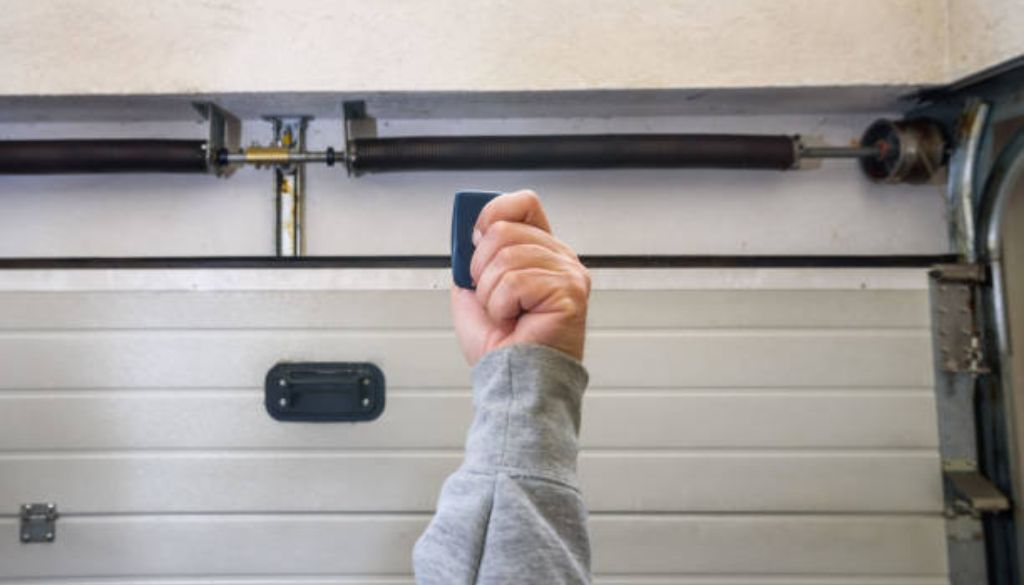
Still hauling your garage door up by hand every morning? You’re not alone — thousands of Aussie homeowners operate manual garage doors every day, often without realising how easy it is to upgrade to automatic operation. Whether it’s the inconvenience of getting out of your car in the rain, concerns about security, or simply wanting a smoother daily routine, converting a manual garage door to automatic is one of the most practical home improvements you can make.
This guide covers everything you need to know: whether your door qualifies, what the process involves, the types of openers available, and when it’s worth calling in a professional.
Can You Convert a Manual Garage Door to Automatic?
The short answer is yes — in most cases. The vast majority of manual garage doors can be fitted with an automatic opener, provided the door is structurally sound and operates smoothly by hand.
The key factor isn’t whether automation is possible, but whether your existing door is ready for it. A door that’s already struggling — with worn springs, bent tracks, or misaligned panels — will only cause problems once a motor is added. If the door doesn’t move freely and balanced without an opener, no automation system will fix those underlying issues.
Before any conversion, the door must pass a simple balance test: disconnect any existing mechanism and lift the door manually to waist height. It should stay in place with minimal drift in either direction. If it drops or rises on its own, the springs need attention first.
When Conversion Is Not Recommended
Some doors are better candidates for full replacement rather than automation:
- Panels with significant damage, warping, or rot
- Bent or buckled tracks that can’t be realigned
- Doors approaching end of lifespan (typically 15–25 years for steel, depending on maintenance)
- Non-standard door sizes or custom frames that limit motor mounting options
If you’re unsure, the team at Impact Doors can assess your door and advise whether conversion or replacement is the more cost-effective path.
Types of Garage Doors That Can Be Automated
Sectional Garage Doors
Sectional doors — made up of horizontal panels that move along curved tracks — are the most automation-friendly design. They work seamlessly with standard rail-mounted openers, and their controlled vertical movement makes them ideal for all major motor types. Most new Australian homes are fitted with sectional doors for exactly this reason.
Roller Garage Doors
Roller doors coil upward into a drum above the opening. They’re a popular choice for homes with limited ceiling clearance. These doors require a motor that mounts directly to the side or drum rather than a rail system, so compatibility depends on the specific door and motor brand. Impact Doors works with leading brands including B&D, Centurion, Steel-Line, and Dynamic — all of which offer roller door automation options.
Tilt and Up-and-Over Doors
Older tilt-style doors can sometimes be automated, but the mechanisms are more complex and the results less reliable. In many cases, replacing an aging tilt door with a modern sectional or roller design alongside a new motor represents better long-term value.
How to Convert a Manual Garage Door to Automatic
The conversion process typically involves four key stages. While a confident DIYer can handle some of these, professional installation is strongly recommended — particularly when springs are involved.
Step 1 — Inspect the Existing Garage Door
A thorough inspection comes first. The technician will check door balance and spring tension, inspect panels, cables, rollers, and track alignment, confirm the door moves smoothly without excessive resistance, and measure the door’s weight to match it with the appropriate motor.
A balanced, well-maintained door is essential for safe automation. For a closer look at what drives these systems, see our guide: How Do Garage Door Openers Work?
Step 2 — Choose the Right Garage Door Opener
Motor selection depends on door weight, size, usage frequency, and noise tolerance. Heavier doors require higher horsepower motors. Homes with bedrooms above or adjacent to the garage generally benefit from belt or direct drive systems. For a detailed breakdown of what’s available in the Australian market, our Best Home Garage Door Openers Reviewed guide compares the top models by performance, features, and price.
Step 3 — Install the Motor and Rail System
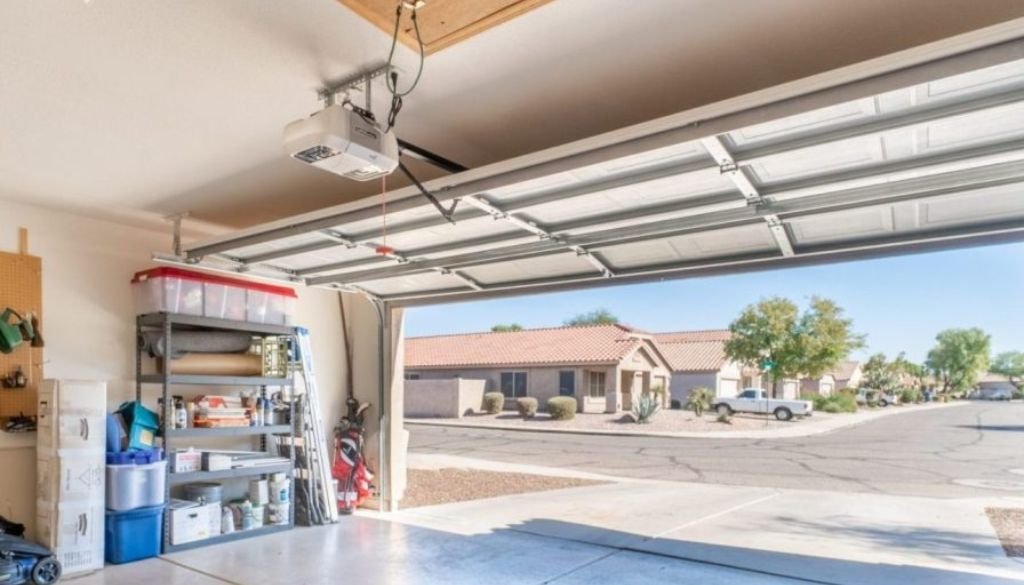
Installation involves mounting the motor unit to the garage ceiling, attaching the drive rail from motor to door header bracket, connecting the trolley and pick-up arm to the door, and wiring the motor to a power source with a wall-mounted control panel.
This is where professional installation pays for itself. Improper mounting or incorrect spring tension can create serious safety hazards. Impact Doors provides expert installation across Moreton Bay and North Brisbane, ensuring every system is fitted correctly the first time.
Step 4 — Programming and Safety Testing
Once the hardware is in place, the system is programmed and tested: door travel limits are set, obstacle detection and auto-reverse sensitivity are calibrated, remotes and wall controls are synced, and a full safety test is carried out before handover.
Modern openers use rolling code technology that changes the access code with every use — a significant security upgrade over older fixed-code systems.
Manual vs Automatic Garage Door: A Quick Comparison
| Feature | Manual Door | Automatic Door |
|---|---|---|
| Operation | Manual lifting | Remote/app controlled |
| Convenience | Physical effort required | Open without leaving your car |
| Security | Basic lock only | Rolling code encryption + sensors |
| Safety | No obstacle detection | Auto-reverse & photo-eye sensors |
| Weather resistance | Must exit vehicle in rain | Operate from inside vehicle |
| Cost | Lower upfront | Higher upfront, greater long-term value |
Benefits of Converting a Manual Garage Door to Automatic
Convenience
The most immediate benefit is not having to leave your vehicle to open and close the door. For families, shift workers, or anyone arriving home after dark or in wet weather, this small change has a significant daily impact. Many modern openers also offer smartphone control, letting you open or close the door remotely.
Improved Safety and Security
Automatic garage doors come equipped with obstacle detection systems and auto-reverse technology that manually operated doors simply can’t match. If anything crosses the door’s path as it closes, the system stops and reverses automatically. Combined with rolling code encryption, automated systems provide a meaningfully higher level of home security.
Reduced Wear on the Door
Controlled, consistent motor-driven movement is actually easier on your door than manual operation. There’s no slamming, uneven lifting, or accidental overextension — all of which contribute to wear on springs, cables, and panels over time.
Types of Garage Door Opener Systems
| Type | Noise Level | Best For | Cost |
|---|---|---|---|
| Chain Drive | Moderate | Heavy doors, budget buyers | $ |
| Belt Drive | Quiet | Bedrooms above garage | $$ |
| Direct Drive | Very quiet | Long-term reliability | $$$ |
Chain Drive Openers
Chain drive systems use a metal chain to pull the trolley along the rail. They’re durable, cost-effective, and handle heavier doors well. The trade-off is noise — chain drives produce more vibration than other types, which may be a consideration if living areas adjoin the garage.
Belt Drive Openers
Belt drives replace the metal chain with a reinforced rubber belt. The result is quieter, smoother operation with reduced vibration. These are popular in homes where the garage sits beneath or beside living areas. They cost more upfront but are generally considered better value for domestic use.
Direct Drive Systems
Direct drive openers have the motor itself travel along a stationary chain embedded in the rail — meaning the motor is the only moving part. This design minimises mechanical wear, reduces noise significantly, and typically offers excellent long-term reliability. They tend to be the premium option.
Smart Garage Door Automation Features
Modern garage door openers go well beyond a basic remote. If you’re considering automation, it’s worth understanding what today’s smart systems can offer.
Smartphone Control
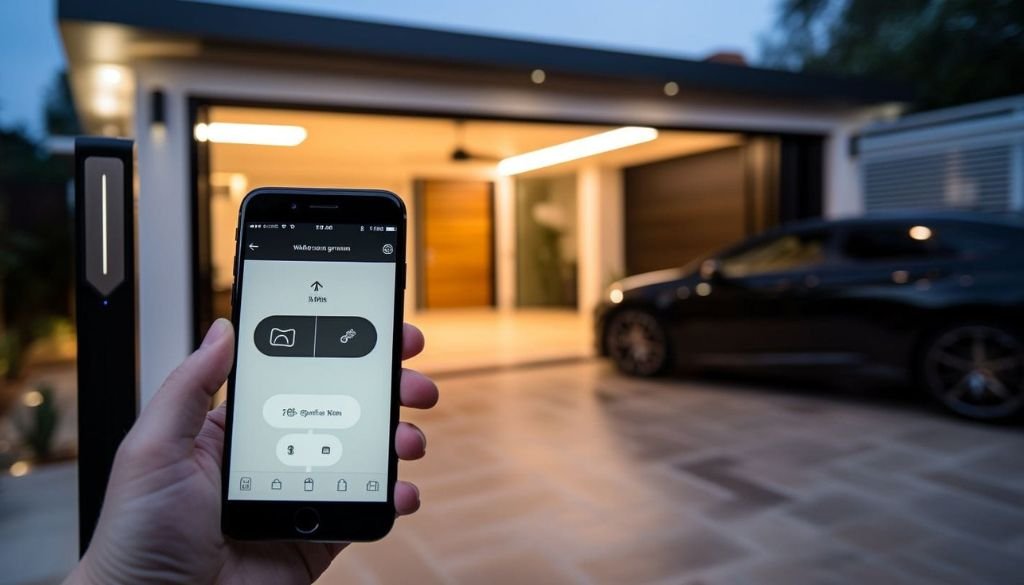
Most current openers can be paired with a Wi-Fi hub or built-in app connectivity, allowing you to open or close the door from anywhere, check the door’s status in real time, and receive alerts if the door is left open. See our complete guide to Smart Home Garage Door Installation for a full breakdown of integration options.
Smart Home Integration
Many systems integrate with Google Home, Amazon Alexa, or Apple HomeKit, enabling voice control and automated routines — such as closing the garage door automatically when you leave or when a home alarm is triggered.
Cost of Converting a Manual Garage Door to Automatic
Conversion costs in Australia vary depending on the motor type, door condition, and installation complexity. As a general guide:
- Basic chain drive motor + installation: from $400–$600
- Belt or direct drive motor + installation: from $600–$1,000+
- Smart opener with app connectivity: from $700–$1,200+
- Door repairs prior to automation (springs, cables, tracks): variable
The best way to get an accurate cost is a site assessment. Impact Doors provides free on-site quotes across Moreton Bay and North Brisbane — call (07) 5451 4022 or submit a request online.
When to Hire a Professional Installer
Garage door springs are under extreme tension and are among the most dangerous components in any home to work with. Attempting to adjust or replace springs without the correct training and tools has resulted in serious injuries. Professional installation is strongly recommended whenever the conversion involves:
- Spring inspection or replacement
- Motor selection for doors over a certain weight
- Track or panel repairs
- Electrical connections or ceiling mounting
Impact Doors has been serving Moreton Bay and North Brisbane since 2016. Owner Jarred Turner and the team provide same-day service and 24/7 emergency support across dozens of suburbs. With a 5.0 rating from over 150 reviews, you can book with confidence. Contact Impact Doors today to arrange your free conversion assessment.
How Long Does a Garage Door Conversion Take?
A straightforward conversion — where the door is already in good condition — typically takes 2 to 4 hours. If repairs are needed first (springs, cables, rollers), the job may take longer or require a follow-up visit. Impact Doors aims to complete most conversions in a single visit.
Frequently Asked Questions
Can any manual garage door be converted to automatic?
Most can, provided the door is structurally sound and operates smoothly by hand. Damaged, warped, or very old doors may be better candidates for replacement first.
Is it cheaper to convert or replace a garage door?
Conversion is generally cheaper if the existing door is in good condition. If the door needs significant repairs before automation, or is nearing end of life, full replacement can be more cost-effective in the long run.
How long does a garage door conversion take?
Most straightforward conversions take 2–4 hours. Complex jobs or those requiring pre-conversion repairs may take longer.
Will the automatic garage door work during a power outage?
Yes — most modern openers include a battery backup that allows operation during power outages. All openers also include an emergency release cord for manual override.
Can an older garage door be converted to automatic?
Yes, in many cases. The key is whether the door is still in good mechanical condition. For more on expected lifespan and when to consider upgrading, see: How Long Do Garage Door Openers Last?
Which opener brand should I choose?
Impact Doors works with leading brands including B&D, Centurion, Steel-Line, and Dynamic. For a comparison of popular opener options, read our Overhead Door vs Chamberlain guide, or browse our reviewed opener roundup for top-rated models.
Ready to Convert Your Manual Garage Door?
Impact Doors makes the process straightforward from start to finish. We assess your existing door, recommend the right motor and system for your home, and handle the full installation — so you can start enjoying the convenience of automatic operation as quickly as possible.
📞 Call us on (07) 5451 4022 or request a free garage door automation quote online. We service Moreton Bay, North Brisbane, and surrounding suburbs — with 24/7 emergency support available when you need it most.
