
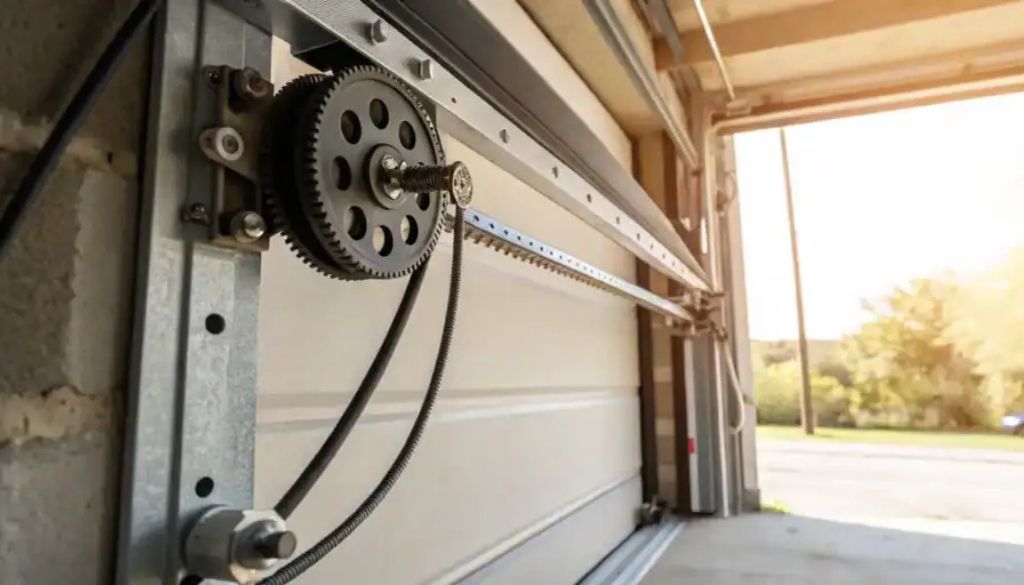
You press the button on your remote, hear the motor hum to life, and watch the chain start moving along the rail — but the garage door doesn’t budge. It’s one of the more confusing garage door problems homeowners encounter, and if you’re dealing with it right now, you’re probably wondering whether this is a quick fix or a sign of something more serious.
The good news is that this issue almost always has a clear mechanical cause. The not-so-good news is that some of those causes involve components you shouldn’t attempt to repair yourself. This guide walks you through exactly what’s happening, the most likely reasons your garage door chain is moving while the door stays shut, which fixes you can safely try, and when it’s time to call a professional.
What It Means When the Chain Moves but the Door Doesn’t
To understand this problem, it helps to know how a chain-drive garage door opener actually works. The motor drives a chain along a rail mounted to your garage ceiling. That chain is connected to a trolley (also called a carriage), which attaches to a metal arm bolted to the top of your garage door. When everything is working correctly, the chain pulls the trolley, the trolley pulls the arm, and the arm lifts the door. For a complete breakdown of this system, our guide on how garage door openers work explains each component in detail.
When the chain moves but the door stays still, it means the connection between the motor’s drive mechanism and the door itself has been broken somewhere along that chain of components. The motor is doing its job, but the force isn’t reaching the door. Identifying exactly where that disconnect is happening tells you what needs to be fixed.
Most Common Causes of This Problem
The Manual Release Cord Is Disengaged
This is the single most common reason for this issue, and fortunately, it’s the easiest to fix. Every automatic garage door opener has an emergency release mechanism — a red cord and handle hanging from the trolley on the rail. When pulled, it disconnects the trolley from the chain drive, allowing you to operate the door by hand during power outages or emergencies.
The problem is that this release can be triggered accidentally. A bump from a ladder, a child pulling on it, or even vibration over time can disengage the trolley without anyone realising. When this happens, the motor runs and the chain moves, but the trolley simply slides along without engaging the door.
To re-engage it, pull the release cord back toward the opener unit (toward the motor) until you hear a click. Then run the opener — the trolley should catch the chain connector and resume normal operation. If it doesn’t engage on the first try, manually move the door until the trolley and connector line up, then try again.
Broken or Snapped Garage Door Spring
If you heard a loud bang from the garage before the door stopped working, there’s a strong chance a torsion spring has snapped. Garage door springs bear the vast majority of the door’s weight. Without them, your door effectively becomes a 100+ kilogram dead weight that the opener motor was never designed to lift on its own.
When a spring breaks, the chain will move because the motor is still running, but the opener simply cannot generate enough force to raise the unsupported door. You may also notice the door feels impossibly heavy if you try to lift it manually, or you can see a visible gap in the spring coil above the door. Our article on what happens when a garage door spring breaks covers the warning signs and immediate safety steps you should take.
This is not a DIY repair. Torsion springs are under extreme tension and can cause serious injury if handled incorrectly. Stop using the opener immediately and call a licensed technician.
Stripped Drive Gear Inside the Opener
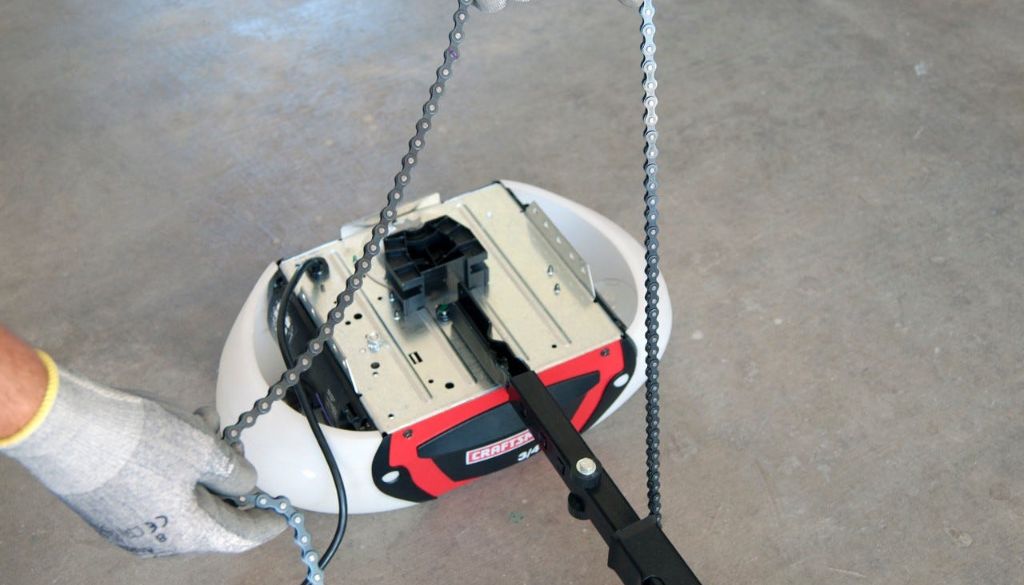
Most chain-drive garage door openers use a nylon drive gear inside the motor housing. Over years of use, this gear wears down and eventually strips. When it does, the motor spins freely but fails to engage the chain properly, or the chain moves without the full force needed to drive the trolley.
Common signs of a stripped gear include a grinding or clicking noise from the opener unit, small plastic shavings or white dust on the floor beneath the motor, and the chain moving sluggishly or inconsistently. In some cases, the gear can be replaced without swapping the entire opener, but this requires disassembling the motor housing and is best handled by a technician familiar with your specific opener model.
Chain Is Loose, Broken, or Slipping
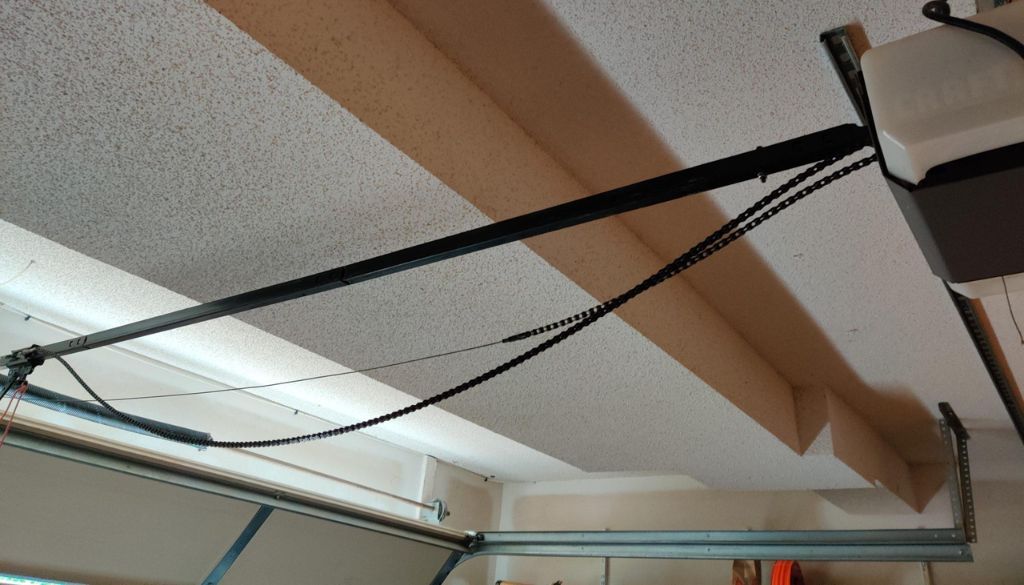
A chain that has stretched over time or lost proper tension may move when the motor runs but slip rather than pulling the trolley with enough force to lift the door. In more severe cases, the chain may have jumped off the sprocket or broken entirely.
Inspect the chain visually with the power disconnected. It should have a slight sag in the middle of the rail — about 5 to 10 millimetres below the rail when the door is closed. If it’s hanging noticeably lower, it likely needs tightening. Most openers have a chain tension adjustment nut on the rail near the motor. However, if the chain is visibly damaged, kinked, or missing links, it needs professional replacement.
Trolley or Carriage Failure
The trolley is the plastic or metal piece that rides along the rail and connects the chain to the door arm. Internal components within the trolley can crack, shear, or wear out, especially in older openers. When this happens, the chain passes through or around the trolley without moving it.
If you’ve ruled out the manual release and the chain appears to be moving correctly, but the trolley itself isn’t travelling along the rail, internal trolley failure is the most likely cause. Replacement trolleys are available for most opener brands, but selecting the correct part and installing it properly requires matching it to your specific model.
How to Diagnose the Exact Cause
Before you start any inspection, disconnect the opener from power. Then follow these steps:
Check the emergency release cord first. Is the trolley disengaged from the chain connector? This solves the problem in the majority of cases. Next, try lifting the door manually. If it feels extremely heavy or won’t budge, suspect a broken spring. If it lifts smoothly, the issue is likely in the opener mechanism. Inspect the chain visually for damage, excessive slack, or signs it has jumped the sprocket. Listen to the opener when you reconnect power. Grinding noises suggest a stripped gear, while normal motor sounds with no trolley movement point to a trolley or coupler failure. For guidance on testing your door’s balance during this process, see our guide on how to balance a garage door.
Stop immediately if you see a broken spring, hear unusual snapping sounds, smell burning from the motor, or the door moves unevenly. These situations require professional attention.
DIY Fixes You Can Try Safely
Some causes of this problem are safe for homeowners to address. Re-engaging the manual release trolley is the most common and simplest fix. Tightening a loose chain using the adjustment mechanism on the rail is also within reach for most handy homeowners, provided you follow your opener’s manual. Resetting the opener by unplugging it for 30 seconds and then reconnecting it can sometimes resolve electronic glitches that prevent proper trolley engagement.
For more hands-on troubleshooting steps, including sensor checks and remote issues that sometimes accompany this problem, our garage door opener problems guide covers a wide range of scenarios.
Repairs You Should NOT Attempt Yourself
Certain repairs associated with this issue are genuinely dangerous for untrained homeowners. Spring replacement tops this list — torsion springs store enough energy to cause severe injury or death if mishandled. Lift cable repairs carry similar risks, as cables are under significant tension when the door is in any position other than fully open. Motor disassembly for gear replacement involves electrical components and should only be performed by a qualified technician. Track or structural repairs can compromise the entire door system if done incorrectly.
Safety Risks If You Keep Running the Opener
If your chain is moving but the door isn’t opening, continuing to press the button and run the motor is one of the worst things you can do. Each cycle puts unnecessary strain on the motor, the gears, and the chain. A motor that’s working against a door it can’t lift will overheat, and repeated overheating burns out the motor entirely — turning a $200 repair into a $500+ opener replacement. If a spring is broken, forcing the opener can also damage the door panels, bend tracks, or snap lift cables, compounding the problem and the cost.
Preventing This Issue in the Future
Most causes of the “chain moving but door not opening” problem are preventable with regular maintenance. Lubricate the chain, rollers, hinges, and springs every six months with a silicone-based lubricant. Have your springs and cables professionally inspected at least once a year — springs that are nearing the end of their 10,000-cycle lifespan can be replaced before they snap. Know how your emergency release works so you can recognise when it’s been accidentally triggered. Our preventive maintenance guide provides a full seasonal checklist to keep your entire system running reliably.
Frequently Asked Questions
Why does my garage door chain move but the door won’t open?
The most common cause is a disengaged emergency release trolley. Other causes include a broken spring, stripped drive gear, loose or broken chain, or internal trolley failure.
Can I force the door open if the chain is moving?
Never try to force the door. If the door won’t move, something is preventing it from operating safely. Forcing it can cause further damage or injury. Identify the cause first.
Is it safe to keep using the opener when this happens?
No. Running the motor repeatedly when the door isn’t responding can burn out the motor, strip gears, and escalate what may be a simple fix into a costly replacement.
How much does it cost to fix this problem?
Costs vary depending on the cause. Re-engaging a trolley is free. Chain tightening or gear replacement typically runs $150 to $350. Spring replacement by a professional usually costs $200 to $500.
Should I repair or replace my garage door opener?
If your opener is more than 10 to 15 years old and requires motor or gear work, replacement is often more cost-effective. Newer models also include safety and smart-home features that older units lack.
When to Call a Professional Garage Door Technician
If re-engaging the trolley and checking the chain tension doesn’t resolve the issue, it’s time for professional help. This is especially true if the door feels extremely heavy when lifted manually, you heard a loud bang before the problem started, the motor runs but produces grinding or burning smells, or the chain moves but the trolley doesn’t travel along the rail.
At Impact Doors, we diagnose and repair chain-drive opener failures, broken springs, stripped gears, and trolley replacements across the Moreton Bay Region and North Brisbane. Our qualified technicians carry quality parts from brands like B&D, Centurion, and Steel-Line, and we offer same-day emergency callouts so you’re not left with a garage you can’t secure.
Don’t keep pressing the button and hoping for the best. Call Impact Doors on (07) 5451 4022 or request a free on-site quote to get your garage door diagnosed and fixed properly.
