

Many Australian homeowners believe the motorised opener lifts their heavy panel. This is a common misunderstanding. The real workhorse is a set of specialised components hidden above the opening.
The opener simply starts and controls the motion. The counterbalance system provides the actual lifting force. Without it, the motor would be completely ineffective.
This leads to a vital question about replacements. These essential parts are not a one-size-fits-all solution. They must be carefully matched to your specific setup.
Getting the correct match is critical for safety and performance. An incorrect choice can cause operational failures. It may also damage other parts and create hazardous situations for your family.
We will guide you through the complexities. Understanding the requirements for your home ensures a safe, reliable, and long-lasting installation.
While learning about garage door spring compatibility, you might also be interested in understanding what garage door opener works with Google Home to make your system smarter and more convenient.
Key Takeaways
- The motorised opener controls movement, but the counterbalance system does the heavy lifting.
- These components are not universal and require precise matching to your specific setup.
- Correct sizing is essential for safe and smooth operation of your entry point.
- Using the wrong part can lead to premature wear and potential safety risks.
- Professional assessment is often necessary to ensure compatibility and safety.
Understanding Different Types of Garage Door Springs
Property owners often encounter two distinct counterbalance systems designed for overhead entryways. Each operates on different mechanical principles and offers unique advantages for Australian homes. After confirming spring fitment, this article on how to adjust side mounted garage door springs correctly helps finish the job properly.
Torsion Springs vs Extension Springs
The torsion system features stiff metal coils mounted horizontally above the opening. These components twist to store mechanical energy as the panel descends. High-strength materials like titanium and stainless steel give them exceptional durability.
In contrast, extension mechanisms position long, lightweight coils on each side of the frame. They work by stretching and contracting rather than twisting. This stretching motion generates the necessary lifting force.
Key Components and Functions
Both systems rely on fundamental physics principles. As the heavy panel closes, cables pull on tightly wound components. This creates stored tension that counterbalances the weight.
When opening occurs, this stored energy releases smoothly. The result is a nearly weightless feel when operating the system. Understanding these mechanical differences helps homeowners make informed decisions.
Torsion mechanisms have gained popularity for their superior performance in garage doors. They typically last up to 20,000 cycles compared to extension systems’ 10,000 cycles. This makes them a preferred choice for long-term reliability in door systems, reducing the need for frequent door repair and garage door repair.
How Garage Door Opener and Springs Interact
Many people mistakenly believe the opener bears the full weight of the entire system. This misunderstanding can lead to costly repairs and premature component failure. We want to clarify the true working relationship between these essential parts.
The motorised unit acts as a starter and movement regulator rather than the primary lifting force. It provides the initial energy to overcome inertia and get your panel moving. Then it carefully controls the speed throughout the opening and closing cycle.
The Role of Springs in Door Operation
Your counterbalance components are the true workhorses of the setup. They store mechanical energy through tension and release it during operation. This makes the heavy panel feel nearly weightless when functioning correctly.
Properly sized components create perfect balance for smooth performance. They counterbalance the weight so the motor doesn’t strain. This protection extends the lifespan of your entire investment.
Impact on the Opener’s Performance
Undersized components force the motor to work overtime. The unit struggles to lift additional weight it wasn’t designed to handle. This extra strain often leads to motor burnout and costly replacements.
Oversized parts create the opposite but equally damaging problem. They try to move the panel too quickly, forcing the opener to act as a brake. This constant braking action creates different stress that also shortens motor life.
Understanding this interaction helps Australian homeowners protect their investment. Correct sizing ensures all components work together harmoniously for years of reliable service.
Are Garage Door Springs Universal
There’s a persistent myth in home maintenance circles that these essential counterbalance parts are standardized. We want to clarify this misconception directly. These components are not interchangeable between different setups. To fully understand why garage door springs aren’t universal, it helps to know how do garage doors work and how each component plays a role in balancing weight and ensuring smooth operation.
Common Misconceptions
Many Australian homeowners assume that any replacement will fit their system. This belief can lead to serious operational issues. The components vary significantly in multiple dimensions.
Wire thickness, coil length, and weight capacity differ between models. What works for one property might be completely unsuitable for another. Proper matching requires careful consideration of these factors.
Importance of Proper Sizing and Compatibility
Correct sizing ensures your entry system operates smoothly and safely. When the counterbalance matches the panel weight perfectly, everything works harmoniously. This balance prevents strain on other components.
An incorrect choice creates multiple problems. Undersized parts force the motor to work excessively. Oversized components can cause dangerous uncontrolled movement.
We emphasize that compatibility isn’t just about performance. It’s a critical safety consideration for every Australian household. Proper matching protects your family and investment.
Measuring and Selecting the Right Spring System
Proper measurement forms the foundation of selecting compatible counterbalance components for your entry system. Getting these specifications correct ensures safe operation and prevents damage to other mechanisms.
Accurate Measurement Techniques
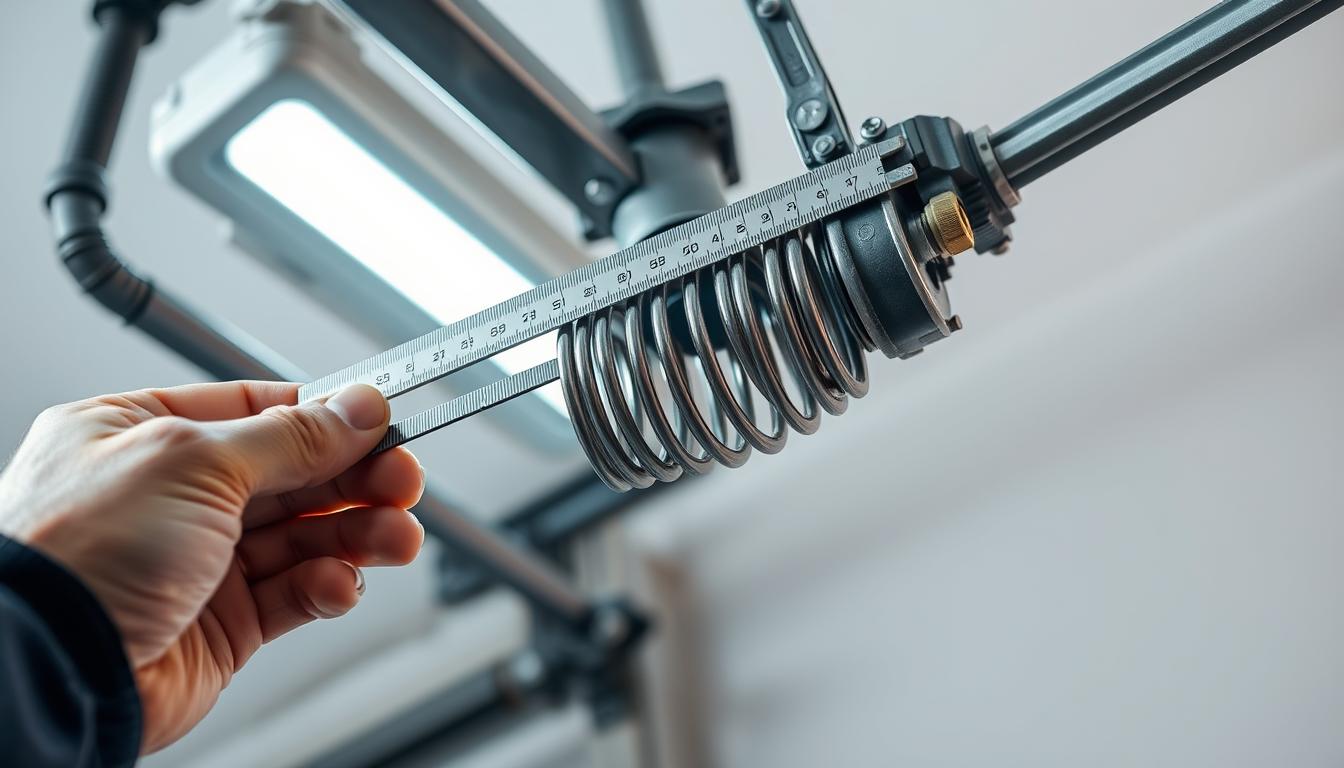
For torsion mechanisms, you need four critical measurements: wire diameter, inside diameter, overall length, and wind direction. To determine wire size, count 20 coils and measure the distance, then divide by 20. Precision is essential—even slight errors can lead to incorrect replacements.
Wind direction identification involves examining the coil pattern. Counterclockwise indicates left-hand wind, while clockwise shows right-hand wind. Colour-coded cones provide visual guidance: red cones signify right-wound components for the left side, black cones indicate left-wound for the right side.
Matching Spring Weight to Door Specifications
Extension mechanisms require simpler but equally precise measurement. You need the length end-to-end with the panel closed and the exact weight of your entry system. A traditional 7-foot opening typically needs a 25-inch component.
Colour coding helps identify weight capacity, ranging from white (10/110/210 lbs) to yellow (30/130/230 lbs). Matching capacity precisely is critical—a 110-pound mechanism on a 150-pound panel will stretch beyond repair and eventually fail dangerously.
When to Seek Professional Assistance
This measurement process involves significant risks and technical complexity. The high tension in these components makes DIY attempts potentially hazardous. Even experienced homeowners should consider professional assessment.
We strongly recommend contacting Impact Doors on (07) 5451 4022 for expert measurement and selection. Their trained specialists have the proper tools and experience to ensure your system operates safely and efficiently for years.
Installation and Repair Best Practices
When it comes to maintaining your home’s entry system, proper installation techniques are crucial for long-term reliability. We believe in transparently sharing knowledge while emphasizing safety above all else.
Step-by-Step Replacement Process
The replacement process begins with critical safety measures. Always disconnect power to the motor unit and secure the panel completely using locking pliers. This prevents unexpected movement during work.
For extension mechanisms, technicians disconnect safety cables before removing old components from track hangers. New parts are carefully installed and tested for proper tension. Torsion systems require specialized winding tools and precise adjustments to the shaft.
Each step demands specific technical knowledge. Professional technicians complete the entire process efficiently while maintaining strict safety protocols.
DIY Risks vs Professional Service
Online tutorials often make this work appear straightforward. However, they rarely convey the extreme dangers involved. Components under high tension can cause serious injury if handled incorrectly.
Professional service offers comprehensive protection. Our team at Impact Doors carries full insurance and uses proper equipment. We ensure your system warranty remains valid while delivering quality workmanship.
Attempting repairs yourself may seem cost-effective initially. Yet the risks far outweigh potential savings. Trust our experienced technicians for safe, reliable replacements that protect your family and investment.
Contact Impact Doors on (07) 5451 4022 for professional assessment and service. We prioritize your safety while ensuring optimal performance for years to come.
Maintenance Tips for Longevity
Consistent maintenance practices can double the service years of your counterbalance system. While manufacturers suggest monthly inspections, we understand most households follow more realistic schedules.
Routine Checks and System Adjustments
Perform visual inspections for rust or damage monthly. Listen for unusual noises during operation. Test the balance by manually lifting the panel halfway—it should stay in position.
Professional adjustments like tension modifications require specialized tools. Our technicians at Impact Doors handle these safely with proper equipment.

Environmental and Usage Considerations
Australian conditions like coastal salt air accelerate wear. Extreme heat and dust demand more frequent attention than moderate climates.
Usage patterns directly impact component lifespan. A system cycled eight times daily needs replacement in 3-4 years, while four daily cycles extends this to 7 years.
| Usage Frequency | Recommended Maintenance | Expected Lifespan |
|---|---|---|
| 2-4 cycles daily | Annual professional check | 7-10 years |
| 5-8 cycles daily | Bi-annual professional service | 3-5 years |
| High-usage or coastal areas | Quarterly inspections | Regular assessment needed |
Proactive care prevents unexpected failures. Contact Impact Doors on (07) 5451 4022 for scheduled maintenance that protects your investment.
Troubleshooting Common Garage Door Spring Issues
Recognising early warning signs in your home’s entry system can prevent major safety hazards and costly repairs. We help Australian homeowners identify problems before they escalate into dangerous situations.
Signs of Wear and Imbalance
Visible damage includes torsion mechanisms snapped completely in half with separated coils. Extension types often stretch out, losing their ability to maintain proper tension. Both scenarios create immediate risks.
Listen for unusual grinding noises during operation. Watch for uneven movement or panels that won’t open fully. These symptoms indicate components are failing to counterbalance the weight properly.
When your motorised unit strains to lift the panel, it’s compensating for worn counterbalance parts. This extra stress can damage the opener and other mechanisms. Immediate attention prevents further damage.
Service Options in Australia
We offer comprehensive solutions for all spring-related issues. Our team provides emergency repairs, scheduled maintenance, and complete replacements. Early intervention keeps costs manageable and ensures family safety.
Are Garage Door Springs Universal
| Service Type | Response Time | Best For |
|---|---|---|
| Emergency Repair | Same Day | Broken or dangerous situations |
| Scheduled Maintenance | Within 48 Hours | Preventative care and adjustments |
| Full Replacement | By Appointment | Worn systems needing upgrade |
Contact Impact Doors on (07) 5451 4022 for professional assessment. Our experts ensure safe, reliable operation of your entry system.
Conclusion
The safety and performance of your property’s access point depend entirely on perfectly matched counterbalance mechanisms. These components are definitely not universal and require precise matching to your specific setup.
Understanding the differences between torsion and extension systems, proper sizing requirements, and the serious safety considerations involved ensures reliable operation. While these parts might appear simple, they operate under extreme tension and demand professional expertise.
Attempting DIY work often leads to greater expenses from incorrect sizing, voided warranties, and potential injuries. Regular professional inspections can significantly extend your spring lifespan and prevent unexpected failures.
We provide comprehensive garage door services including repairs, installations, and opener replacements. Contact Impact Doors on (07) 5451 4022 for reliable, safe solutions handled correctly from the start.
FAQ
Can I use any replacement spring for my garage door?
No, garage door springs are not universal. They must be specifically matched to your door’s weight, size, and type. Using an incorrect spring can lead to dangerous operation, premature wear on other components like the opener, and potential safety hazards.
What is the main difference between torsion and extension springs?
Torsion springs are mounted above the closed door on a metal shaft, using torque to lift the door. Extension springs run along the horizontal tracks on either side, stretching to provide lifting energy. Torsion systems are generally considered safer and more balanced for modern doors.
How do I know if my garage door spring is broken?
The most obvious sign is that the door becomes extremely heavy to lift manually. You might also hear a loud bang when it breaks. The door may only open a few inches or not at all if the spring system fails. We recommend ceasing operation immediately and contacting a professional for repair.
Is it safe to replace a garage door spring myself?
We strongly advise against DIY replacement. These components are under high tension, and improper handling can cause serious injury or damage. The installation process requires specialised tools and knowledge of safety protocols, making it a job for trained technicians.
How long do garage door springs typically last?
The lifespan depends on usage and quality, but most springs are rated for a certain number of cycles (one open/close sequence). Residential torsion spring often last 10,000 cycles, which translates to about 7-10 years with normal use. Regular maintenance can help maximise their service life.
Why is proper sizing so critical for a new spring?
Correct sizing ensures the spring counterbalances the exact weight of your door. If the spring is too weak, the opener strains and the door closes harshly. If it’s too strong, the door won’t stay down, creating a significant safety risk. Accurate measurements of wire size, overall length, and wind direction are essential.
What maintenance can I perform to extend my spring’s life?
You can visually inspect springs monthly for signs of rust or gaps. Lubricate them periodically with a silicone-based spray, and keep tracks clean. However, any adjustments to tension or cables should be left to professionals. Environmental factors like coastal salt air can also accelerate wear.
