
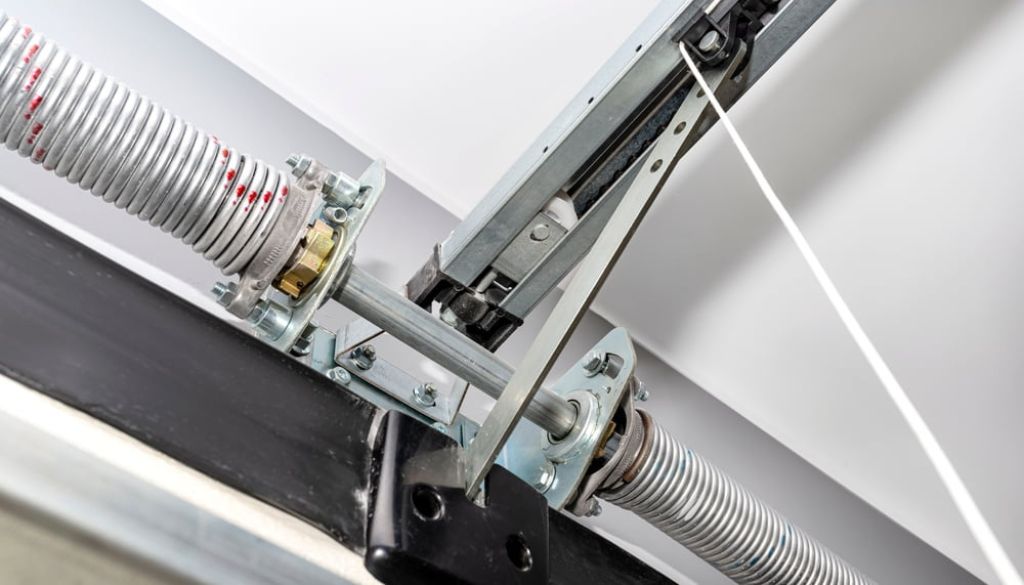
Heard a loud bang from your garage? If your door suddenly feels impossibly heavy or won’t budge at all, there’s a good chance a torsion spring has failed. What many homeowners across Moreton Bay and North Brisbane don’t realize is that their garage door might only have one spring—and upgrading to a dual spring garage door system could significantly improve reliability, safety, and longevity.
In this comprehensive guide, we’ll explain everything you need to know about dual spring systems: what they are, why two springs outperform one, what to expect when upgrading, and how much it costs. Whether you’re dealing with a broken spring right now or planning ahead for better performance, this guide will help you make an informed decision.
What Is a Dual Spring Garage Door System?
A dual spring garage door uses two torsion springs mounted side-by-side on a steel shaft above the door, rather than one large spring handling the entire weight. This seemingly simple change makes a substantial difference in how your garage door operates and how long your system lasts.
Here’s how torsion springs work:
Most modern sectional garage doors use torsion springs installed on a horizontal shaft above the door opening. These tightly wound steel coils store enormous amounts of energy when the door closes, then release that energy to assist in lifting when you open the door.
In a dual spring setup:
- The door’s weight is divided between two springs
- Each spring carries approximately half the total load
- Stress is distributed more evenly across both springs
- Wear and fatigue happen more gradually
- System redundancy provides a safety backup
Think of it like having two people sharing the load of heavy furniture instead of one person struggling alone—the task becomes easier and safer for everyone involved. Learning how garage door springs work helps you understand why this load distribution matters so much for longevity and safety.
Why Your Springs Matter More Than Your Opener
Here’s a common misconception: most homeowners assume their garage door opener does all the heavy lifting. It doesn’t. In reality, your garage door opener is just a guide—the springs do the actual work, handling approximately 75-80% of your door’s weight.
Consider this: a standard double-width garage door can weigh anywhere from 100kg to 180kg (220-400 pounds). Without properly tensioned springs counterbalancing this weight, your opener motor cannot safely lift the door. It would strain, overheat, and eventually burn out trying to do the springs’ job.
This is precisely why spring condition matters so much—and why having two springs instead of one can make such a dramatic difference in system performance and lifespan.
Single Spring vs Dual Spring: The Critical Differences
Understanding the differences between single and dual spring systems helps you appreciate why upgrading makes sense for most double-width garage doors.
| Feature | Single Spring System | Dual Spring System |
|---|---|---|
| Load Distribution | One spring carries 100% of weight | Two springs share the load (50% each) |
| Lifespan | Shorter (10,000-15,000 cycles) | Longer (potential 20,000+ cycles) |
| Failure Impact | Door becomes completely inoperable | Often still partially functional |
| Safety Profile | Higher sudden drop risk | More controlled, gradual failure |
| Opener Strain | Higher motor stress | Reduced motor load |
| Installation Cost | Lower upfront | 20-30% higher initially |
| Long-term Value | More frequent replacements | Fewer service calls |
| Redundancy | Zero backup if spring fails | Second spring provides backup |
The differences become especially apparent when a spring fails—which is when many homeowners first discover they only have one spring.
The Biggest Advantage: What Happens When One Spring Breaks
The most significant benefit of a dual spring garage door becomes obvious during a spring failure. Here’s what happens in each scenario:
With a Single Spring System:
- You hear a loud, explosive bang (often mistaken for a car accident)
- The door becomes dead weight immediately
- The opener cannot lift the door at all
- The door may slam shut if failure occurs while opening
- You’re completely stuck until repair is completed
- Risk of motor damage if you keep trying the opener
With a Dual Spring System:
- One spring fails but the second continues functioning
- The door often remains partially operable (though heavier than normal)
- You may still be able to open the door manually or with assistance
- Much lower risk of catastrophic drop
- You’re far less likely to be completely stranded
- Time to schedule repair at your convenience rather than as an emergency
This backup functionality is invaluable, especially if a spring breaks when you need to leave for work, during a medical emergency, or when you’re trying to get your car out during a storm. Understanding what happens when garage door springs break helps you prepare for this common issue.
Why Builders Sometimes Install Only One Spring
If dual springs are clearly superior, why do so many homes have single spring systems? The answer usually comes down to initial construction costs.
When builders construct new homes, they often look for ways to reduce upfront expenses while still meeting basic functionality requirements. A single torsion spring technically operates a double-width door—it just doesn’t provide the longevity, safety margin, or redundancy of dual springs.
Single spring installations typically occur when:
- Builders choose the absolute minimum specification
- Construction budgets are extremely tight
- The door manufacturer’s “standard” option includes one spring
- No one specifically requests upgraded spring systems
While this approach saves perhaps $150-$250 during initial construction, it creates several long-term problems:
- Accelerated wear — The single spring experiences constant maximum stress
- Faster fatigue — More stress cycles means shorter lifespan
- Higher failure risk — No redundancy when the spring eventually breaks
- Increased opener strain — Motor works harder with less balanced load
- More frequent replacement — Homeowners replace springs more often
Upgrading to a dual spring system corrects these issues and typically provides far better long-term value, even factoring in the initial upgrade cost.
How Long Do Dual Springs Last?
Spring lifespan depends on several factors, but dual springs generally outlast single spring systems significantly.
Standard lifespan expectations:
- 10,000-15,000 cycles for standard-grade springs
- 20,000-30,000 cycles for high-cycle premium springs
- 25,000-50,000 cycles for commercial-grade springs
What’s a “cycle”? One complete cycle equals one full opening plus one full closing. If your household opens the garage door 4 times daily, that’s approximately 1,460 cycles per year.
Why dual springs last longer:
- Each spring experiences only half the stress
- Reduced fatigue on each individual spring
- More balanced load distribution
- Less strain on spring mounting points
- Reduced wear on bearings and center plates
For most families, standard high-cycle dual springs should provide 12-15+ years of reliable service—significantly longer than a single spring system under the same usage conditions. Our detailed guide on how long garage door springs last provides more information on maximizing spring lifespan.
Cost of Dual Spring Garage Door Installation & Replacement
Understanding the costs involved helps you budget appropriately and make informed decisions about timing and service providers.
Professional Replacement Costs in Moreton Bay & North Brisbane:
Single spring replacement (one spring):
- Parts and labor: $250-$350
- Duration: 45 minutes to 1 hour
- Includes spring, labor, and safety inspection
Dual spring replacement (both springs):
- Parts and labor: $400-$550
- Duration: 1-1.5 hours
- Includes both springs, labor, balance adjustment, safety check
Upgrade from single to dual spring system:
- Parts and labor: $450-$600
- Duration: 1.5-2 hours
- May require additional shaft or bearing hardware
- Includes complete system reconfiguration
Cost factors that affect pricing:
- Door width (larger doors require stronger, more expensive springs)
- Spring cycle rating (20,000-cycle springs cost more than 10,000-cycle)
- Access and clearance (tight spaces increase labor time)
- Additional hardware requirements (bearings, center plate, etc.)
- Weekend or emergency service premiums
Long-Term Cost Comparison:
Consider this scenario: A homeowner replaces a single spring every 6-8 years at $300 per replacement. Over 20 years, that’s 2-3 replacements totaling $600-$900.
With dual springs lasting 12-15 years and costing $500 to replace, you’d likely need one replacement in 20 years—potentially saving hundreds while enjoying better reliability and safety throughout.
Can You Replace Garage Door Springs Yourself?
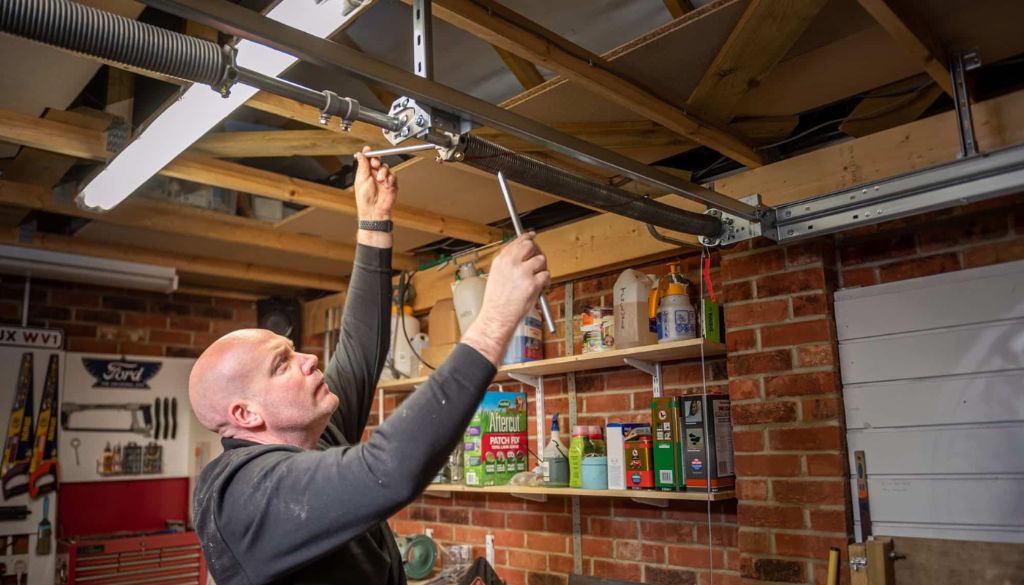
The short answer: We strongly advise against it.
Torsion springs store immense rotational energy—enough to cause severe injury or death if released uncontrolled. Over 30,000 people suffer garage door-related injuries annually, with spring-related accidents among the most serious.
Why DIY spring replacement is dangerous:
- Springs are under extreme tension (hundreds of pounds of force)
- Requires specialized winding bars and precise technique
- One slip can cause the spring or winding bar to become a projectile
- Incorrect spring sizing causes immediate failure or door imbalance
- Improper tension adjustment creates ongoing safety hazards
- Most injuries occur during winding or unwinding operations
What professionals do differently:
- Use hardened steel winding bars (never screwdrivers or improvised tools)
- Follow precise spring sizing formulas based on door weight and height
- Apply exact tension calculations for proper counterbalance
- Use proper safety procedures and body positioning
- Carry insurance for the rare instances when things go wrong
- Test balance and make micro-adjustments after installation
Never attempt to:
- Weld broken springs back together
- Bolt or clamp broken springs as “temporary” fixes
- Adjust tension without proper training and tools
- Remove center brackets while springs are tensioned
Our guide on whether garage door springs are dangerous explains the specific risks in detail and why professional service is essential.
How to Identify Your Current Spring System
Not sure whether you have one spring or two? Here’s how to check:
Step 1: Look above your garage door from inside the garage
Step 2: Locate the horizontal metal shaft running across the top of the door opening
Step 3: Observe the tightly wound coil(s) mounted on this shaft
What you’ll see:
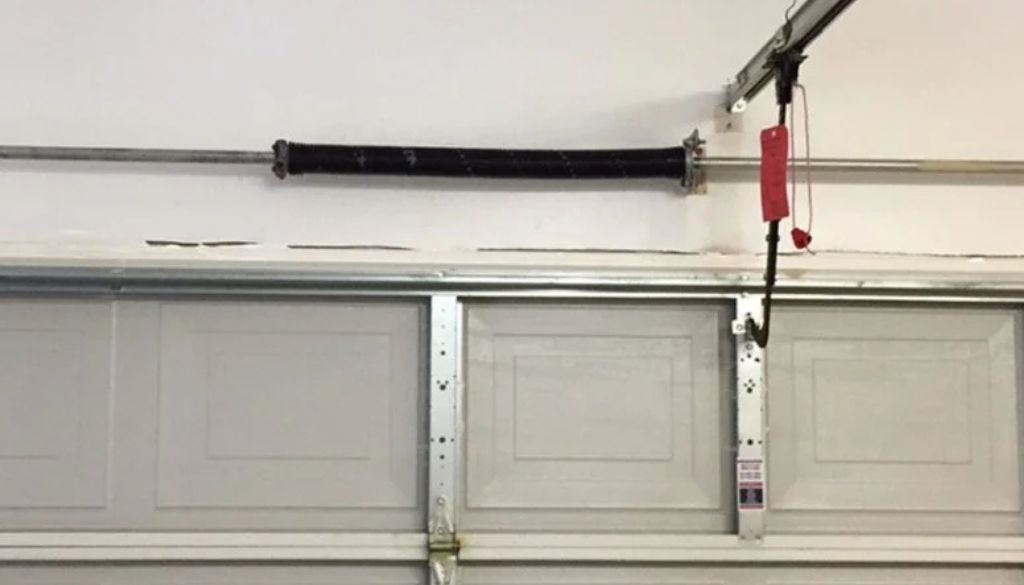
- Single spring system: One large tightly-wound coil, typically in the center
- Dual spring system: Two smaller coils, one on each side of the center bracket
The springs are usually black, dark brown, or galvanized silver. They’re about 2-3 inches in diameter and 18-36 inches long depending on your door specifications.
Warning Signs Your Springs Are Wearing Out
Catching spring wear early prevents dangerous failures and allows you to schedule replacement at your convenience rather than during an emergency.
Watch for these symptoms:
- Door feels heavier than usual — Springs losing tension can’t counterbalance properly
- Won’t stay open at halfway point — Proper balance means the door should stay put when manually positioned halfway
- Visible gaps between spring coils — Stretched or fatigued springs show separation
- Rust buildup on springs — Corrosion weakens the steel and accelerates failure
- Jerky or uneven movement — Indicates unbalanced tension or partial spring failure
- Squeaking or grinding noises — Dry or damaged springs create friction sounds
- Door closes too quickly — Springs may be over-tensioned or partially broken
If you notice any of these signs, schedule an inspection promptly. Catching issues early often means you can plan replacement rather than dealing with an emergency situation.
How to Test Spring Balance Safely
Want to check if your springs are properly balanced? Here’s a safe method that doesn’t require touching the springs themselves:
Step 1: Close the garage door completely
Step 2: Pull the emergency release cord to disconnect the opener trolley
Step 3: Manually lift the door to chest height (about 3-4 feet)
Step 4: Carefully let go of the door
What should happen:
- Properly balanced: The door should stay in place without drifting
- Under-tensioned: The door will slowly drift downward (springs too loose)
- Over-tensioned: The door will slowly rise (springs too tight)
Important: If the door drops quickly or won’t stay at chest height, DO NOT continue testing. This indicates significant spring issues requiring immediate professional attention. Proper garage door balance is critical for safe operation and long opener life.
Is a Dual Spring Garage Door Safer?
Yes, dual spring systems provide several important safety advantages over single spring configurations:
Safety Benefits of Dual Springs:
1. Reduced stress per spring
- Each spring operates at approximately 50% capacity rather than 100%
- Lower operating stress means less likelihood of sudden catastrophic failure
- Springs fatigue more slowly and predictably
2. Backup redundancy
- If one spring breaks, the second provides partial support
- Dramatically reduces the risk of sudden door drop
- Gives you time to close the door safely and schedule repair
3. More balanced lifting force
- Two springs create more even pull across the door width
- Reduces twisting and binding in the track system
- Less strain on rollers, hinges, and cable systems
4. Lower opener strain
- Better-balanced door means less motor stress
- Reduces risk of opener burnout attempting to lift a failed door
- Extends opener motor lifespan
5. Controlled failure mode
- Single springs often fail catastrophically (explosive sound, instant drop)
- Dual spring failures are often more gradual and noticeable
- More warning signs before complete failure
While no spring system is completely failure-proof, dual springs provide significantly better safety margins for your family and property.
When to Call Impact Doors Immediately
Some situations require professional attention right away. Contact Impact Doors at (07) 5451 4022 immediately if you experience:
Emergency situations:
- Loud bang or snapping sound from the garage
- Door dropped suddenly or won’t lift at all
- Visible gap or break in the spring coil
- Door hanging crooked or binding in tracks
- Cable came off the drum or is frayed
- Spring broke while door was in motion
Don’t attempt to:
- Force the opener to lift a door with broken springs
- Try to manually open a door with broken springs
- Remove or adjust springs yourself
- Operate the door repeatedly hoping it will start working
At Impact Doors, we provide 24/7 emergency garage door spring service throughout Moreton Bay and North Brisbane. Owner Jarred Turner and his experienced team respond quickly to spring failures, often providing same-day service to get you back in business.
We carry common spring sizes on our service vehicles and can typically complete both emergency repairs and planned upgrades in a single visit. With over 150 five-star reviews from satisfied customers across the region, you can trust us to handle your spring replacement safely and professionally.
Should You Upgrade to a Dual Spring System?
Upgrading from a single spring to dual springs makes sense in several common scenarios:
You’re a Great Candidate for Upgrading If:
Your spring just broke
- Perfect time to upgrade while repair is already happening
- Minimal additional cost compared to doing it separately later
- Prevents being in this same situation again in 6-8 years
You have a single spring on a double-width door
- Most double garage doors benefit significantly from dual springs
- Noticeable improvement in door operation and balance
- Much better long-term reliability
You use your garage heavily
- 6+ cycles per day puts heavy wear on a single spring
- Dual springs handle high-frequency use much better
- Extends time between replacements substantially
You want maximum reliability
- Dual springs provide the backup you need
- Greatly reduces emergency service calls
- Peace of mind knowing you have redundancy
You’re planning to age in place
- Dual springs reduce the risk of being trapped
- Better safety margins for elderly homeowners
- One less thing to worry about as mobility decreases
Safety is a top priority
- Young children in the home
- Vehicles you can’t afford to have trapped
- Medical equipment or medications stored in garage
For most homeowners, the upgrade cost of $150-$250 more than single spring replacement provides excellent value considering the improved performance, extended lifespan, and enhanced safety.
Preventing Future Spring Problems
Whether you have single or dual springs, proper maintenance extends their lifespan and helps you avoid premature failure:
Every 3-4 months:
- Lubricate springs with white lithium grease or silicone spray
- Listen for unusual squeaking or grinding sounds
- Visually inspect for rust, gaps, or damage
Every 6 months:
- Test door balance using the manual lift method
- Check all cable connections and condition
- Inspect rollers, hinges, and track alignment
Annually:
- Professional inspection by qualified technicians
- Comprehensive system check including springs, cables, opener
- Adjustment of spring tension if needed
- Replacement of worn components before failure
Additional preventive measures:
- Keep garage temperature-controlled when possible (extreme cold/heat accelerates wear)
- Address minor issues immediately before they escalate
- Never ignore warning signs like heavy doors or unusual sounds
- Consider upgrading to high-cycle springs during replacement
Regular maintenance not only extends spring life but also helps you catch problems early when they’re easier and less expensive to address.
Frequently Asked Questions
How much does it cost to upgrade from one spring to two springs?
Upgrading typically costs $450-$600 including parts and labor in the Moreton Bay and North Brisbane area. This includes removing the single spring system, installing new dual springs properly sized for your door, adjusting tension for perfect balance, and conducting a complete safety inspection. While this costs $150-$250 more than simply replacing a single spring, the long-term benefits in reliability, safety, and lifespan make it a worthwhile investment for most homeowners.
If one spring breaks in a dual system, can I just replace that one?
While technically possible, we strongly recommend replacing both springs simultaneously. Here’s why: when one spring breaks, the other spring is the same age and has experienced identical wear. It’s likely to fail within weeks or months, leaving you paying for service calls twice. Replacing both together is more cost-effective and ensures balanced tension, which is critical for smooth operation and long opener life.
Will dual springs make my door quieter?
Yes, in most cases. Dual springs distribute the load more evenly, reducing strain on all components. This typically results in smoother, quieter operation with less jerking or binding. However, if noise is your primary concern, also consider other factors like roller condition (nylon rollers are much quieter than steel), hinge lubrication, and opener type (belt drive openers are inherently quieter than chain drive).
How do I know what size springs I need?
Spring sizing requires precise calculations based on your door’s height, width, weight, and track radius. This isn’t a guess-and-check situation—wrong spring size creates immediate safety hazards and accelerated wear. Professional garage door technicians use spring sizing formulas and weight measurements to determine the exact specifications needed. Attempting to size springs yourself often results in incorrect specifications that cause balance problems and premature failure.
Can I convert from extension springs to torsion dual springs?
Yes, this is possible and often recommended. Extension springs (the long springs that run along the horizontal tracks on each side) are an older technology that’s gradually being phased out in favor of torsion systems. Converting to torsion dual springs provides better balance, longer lifespan, improved safety, and more controlled operation. However, this conversion requires significant hardware changes and professional installation. Our team at Impact Doors can assess your door and provide recommendations on whether this conversion makes sense for your specific situation.
Take Action Today for Better Garage Door Performance
A dual spring garage door system delivers superior reliability, enhanced safety, and longer lifespan compared to single spring configurations. Whether you’re dealing with a broken spring right now or planning proactively for better performance, upgrading to dual springs is one of the smartest investments you can make in your garage door system.
Ready to upgrade or need emergency spring replacement?
Contact Impact Doors today:
- Phone: (07) 5451 4022 (Available 24/7 for emergencies)
- Address: 427 Uhlmann Road, Burpengary East QLD 4505
- Website: impactdoors.net.au
We serve all of Moreton Bay and North Brisbane with professional garage door spring services, including emergency repairs, planned replacements, and system upgrades. Our experienced technicians work with all major door brands including B&D, Best Doors, Stoddart, Centurion, Steel-Line, and Dynamic.
Why choose Impact Doors for your spring replacement:
- 24/7 emergency service—we respond when you need us most
- Same-day service available for most spring repairs
- Experienced technicians trained in safe spring replacement procedures
- Quality parts with excellent warranties
- Transparent pricing with no hidden fees
- Over 150 five-star reviews from satisfied customers
- Family-owned local business serving our community since 2016
Don’t wait for a spring failure to leave you stranded. Whether you’re ready to upgrade to a dual spring system or need emergency repair service, Impact Doors provides the professional expertise and reliable service you deserve.
Schedule your spring inspection or replacement today and experience the peace of mind that comes with a properly functioning, safely maintained garage door system.
Impact Doors has been Moreton Bay and North Brisbane’s trusted garage door service provider since 2016. Owner Jarred Turner and his skilled team specialize in garage door spring replacement, repairs, installations, and emergency service. We understand the critical importance of properly functioning springs and take pride in delivering safe, professional service that exceeds customer expectations. Our commitment to quality workmanship and customer satisfaction has earned us over 150 five-star reviews across the region. For all your garage door spring needs—from emergency repairs to planned upgrades—trust the local experts at Impact Doors.
