
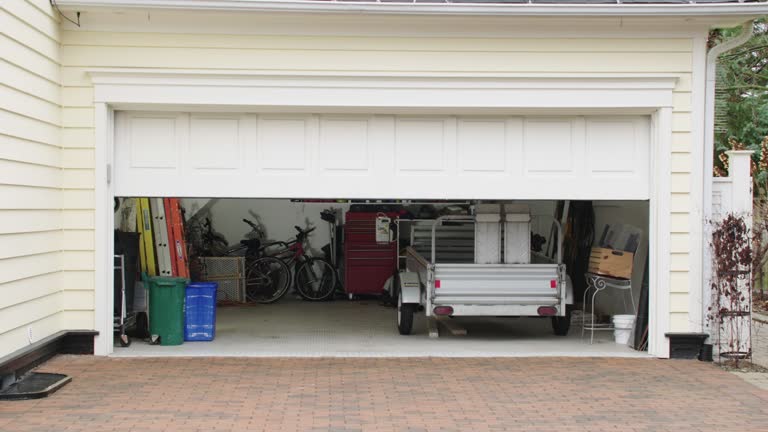
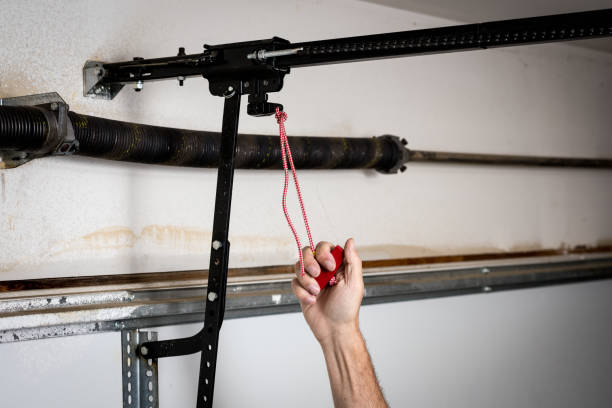
To open a stuck garage door from the outside, start by accessing the emergency release. Look for the red pull cord near the top panel and give it a firm tug to disconnect the opener. If the door is locked, you’ll need an external emergency release kit or key-operated disconnect system to unlock it from the outside. After the opener is disengaged, lift the door manually using both hands. Move slowly and be ready for the weight, as some doors can be heavy. If the red emergency release cord itself won’t disengage, our dedicated guide on what to do when your garage door emergency release is stuck covers the specific causes and safe troubleshooting steps.
Why Your Garage Door Might Be Stuck
Before you attempt to force open your garage door, it’s essential to understand why it won’t open in the first place. A garage door stuck closed can result from several common issues, and identifying the root cause will help you choose the safest approach to opening it.
Power outages are one of the most frequent culprits. When your home loses electricity, your automatic garage door opener won’t work, leaving your door locked in place. This is usually the easiest problem to resolve since the door mechanism itself is still functional.
Broken torsion springs are a serious issue that requires immediate professional attention. These springs are under extreme tension and help counterbalance the weight of your door. When one breaks, your door becomes extremely heavy and dangerous to lift manually. You’ll often hear a loud bang when a spring breaks, and you may notice the door looks uneven or has a gap at the top.
Frozen or jammed rollers and tracks are common during winter months. Ice can form along the bottom seal of your door, essentially gluing it to the ground. Dirt, debris, or misaligned tracks can also prevent the rollers from moving smoothly, causing your garage door opener not working properly even when power is available. Before attempting to manually open a jammed door, it helps to understand how garage door tracks work, as proper alignment can prevent damage and ensure smoother operation.
Locked manual latches can trap you out if you’ve accidentally engaged the interior lock before leaving through another exit. Many garage doors have a slide lock or T-handle on the inside that can be locked, preventing external access.
Malfunctioning openers can fail due to worn gears, motor burnout, or electronic issues. If your opener makes noise but the door doesn’t move, or if it doesn’t respond at all despite having power, the opener mechanism itself may need repair.
Quick Diagnostic Checklist
Before proceeding with manual opening methods, check these items first:
- Is there power to your home and the opener unit?
- Do you hear any unusual noises when pressing the remote?
- Is the door visibly crooked or uneven (sign of broken spring)?
- Is there ice or frost along the bottom of the door?
- Are there any obstructions in the door’s path?
- Is the wall switch working if the remote isn’t?
Safety First — What to Know Before You Try to Open It
Garage door safety should always be your top priority. These doors are the largest moving objects in most homes, typically weighing between 150 to 400 pounds. Attempting to open one improperly can result in serious injury or property damage.
Disconnect the power to your garage door opener if you can access it from outside or through another entrance. This prevents the opener from attempting to activate while you’re working on the door manually, which could cause injury or damage.
Never force the door if a spring is broken. A garage door with a broken spring is extremely heavy and difficult to control. The springs do most of the lifting work, and without them, the full weight of the door rests on you. If you suspect a broken spring, stop immediately and call a professional garage door technician. Signs of a broken spring include visible gaps in the spring coil, a door that won’t budge even slightly, or a door that feels significantly heavier than usual.
Clear the area before attempting to open the door. Make sure no one is standing near the door’s path, and remove any objects or vehicles that could be damaged if something goes wrong. Wear work gloves to protect your hands from sharp edges and improve your grip.
Know your limits. If you have back problems, are not physically strong enough to lift heavy objects, or feel uncomfortable with the process, it’s better to call a garage door repair service than risk injury. There’s no shame in seeking professional help for what is inherently dangerous equipment.
Watch for weather conditions. Never attempt to manually open a garage door during a lightning storm if you’ll be handling metal components. Also be cautious of icy conditions that could cause you to slip while lifting.
How to Manually Open a Garage Door from the Outside
Most modern garage doors are equipped with an emergency release system designed specifically for situations when you need to open garage door manually from outside. This system allows you to bypass the automatic opener and operate the door by hand. Here’s the detailed process:
Step 1 — Locate the Emergency Release Kit
The garage door emergency release kit is your key to manual access from outside. It’s typically installed at the top center of your garage door, though the exact location can vary depending on your door model and when it was installed.
Look for a small lock cylinder, about the size of a padlock keyhole, mounted on the exterior face of your door. This lock is usually positioned just below the top panel or section of the door. Many emergency release locks have a small cover or are painted the same color as the door, so you may need to look carefully.
Behind this lock is a cable or cord connected to the release mechanism inside your garage. You’ll need the emergency release key that came with your garage door system. This key is different from your house keys and is often red or has a distinctive tag. If you don’t have this key, check with previous homeowners, your door installation paperwork, or contact the manufacturer.
Not all garage doors have this external emergency release system, especially older models. If you cannot find this lock cylinder on your door, you may need to use alternate methods or call a professional. To prevent future issues and ensure smooth operation, it’s essential to schedule regular garage door care and seasonal check-ups, which can help you avoid getting stuck in the first place.
Step 2 — Unlock and Pull the Emergency Release Cord
Once you’ve located the emergency release lock, insert the key and turn it counterclockwise. You should feel slight resistance, then the lock cylinder will either pop out slightly or rotate fully. This action unlocks the release mechanism.
After unlocking, you’ll need to grasp the small knob or handle that’s now accessible. In most systems, pulling this will reveal or release a red cord or handle inside your garage. Give it a firm, steady pull downward. You should hear or feel a click as the trolley (the part that connects your door to the opener track) disengages from the opener carriage.
This pull disconnects your door from the automatic opener, allowing it to move freely on its track system. The red cord should hang down inside your garage after being pulled, indicating the door is in manual mode.
Be careful not to pull too hard or jerk the cord, as this could damage the release mechanism. A steady, firm pull is all that’s needed.
Step 3 — Unlock the Manual Door Handle (if applicable)
Many garage doors have a secondary manual lock located in the center of the door for additional security. This typically appears as a T-shaped handle or lever on the exterior of the door.
If your door has this feature, insert the appropriate key into the lock and turn it. The handle should now be able to rotate. Turn the handle from its horizontal (locked) position to a vertical (unlocked) position. This action retracts the horizontal bars or rods that extend into the door tracks on either side, securing the door in place.
Some doors have slide bolts instead of T-handles. These simply slide horizontally to lock and unlock. Make sure any manual locking mechanism is fully disengaged before attempting to lift the door.
Step 4 — Lift the Door Manually
Now that the door is disconnected from the opener and any manual locks are disengaged, you’re ready to lift it open. Position yourself at the center bottom of the door, bending at your knees rather than your waist to protect your back.
Grip the door handle firmly with both hands. Some doors have a designated handle at the bottom; others may require you to grip the bottom edge of the door itself (wear gloves for this).
Lift slowly and steadily, using your leg muscles rather than your back. The door should begin to rise smoothly along its tracks. A properly balanced door with functioning springs should feel relatively light and should stay in place when lifted about halfway.
If the door feels extremely heavy, stops moving, or makes grinding or popping sounds, stop immediately. These are signs of broken springs, damaged tracks, or other mechanical issues that require professional attention. Forcing a stuck door can bend the tracks, damage the panels, or cause the door to fall unexpectedly. Before attempting any manual fixes, it helps to have a basic understanding of garage door mechanics to ensure you handle the components safely and avoid damage.
Continue lifting until the door is fully open. Most garage doors will remain open on their own once fully raised, held in place by the track angle and spring tension.
Step 5 — Secure or Close the Door
Once you’ve accessed your garage and retrieved what you needed, you’ll want to close and secure the door properly. To lower a manually operated garage door, reverse the lifting process by slowly guiding it down the tracks.
Control the descent carefully, as a door with functioning springs will want to help itself down. Don’t let go and allow it to slam shut, as this can damage the door panels, weather sealing, and track system.
Once the door is fully closed, you can re-engage any manual locks by turning the T-handle back to the horizontal position or sliding the bolt locks into place. This will secure your garage until power is restored or the opener is repaired.
To reconnect the door to the automatic opener later (covered in detail in a later section), you’ll need to pull the emergency release cord again or push the trolley back toward the motor unit until it clicks into place.
How to Open a Stuck Garage Door Without a Key
Finding yourself locked out without an emergency release key creates a more challenging situation. While there are a few options to open garage door without key, they come with important limitations and risks.
Use alternate entry points whenever possible. Check if you have a side entry door into your garage, a window that opens, or an access panel from inside your home. These legitimate entry points are always safer and more reliable than attempting to bypass locks or force entry from outside.
If your garage has windows, and one is unlocked, you may be able to climb through (safely and carefully) to access the interior emergency release cord directly. This avoids the need for the external key altogether.
Professional locksmith services can help if you absolutely cannot find your emergency release key and have no other way to access your garage. A qualified locksmith can either pick the emergency release lock or provide you with a replacement key based on the lock’s manufacturer information.
Avoid DIY bypass methods you might find online, such as using coat hangers or fishing line to trigger the internal emergency release. While these methods are sometimes shown in videos, they come with serious risks. First, attempting to fish a wire or tool through the top of your door can damage weather sealing, scratch your door’s finish, or break internal components. Second, if these methods actually work on your door, it means your garage is vulnerable to break-ins—a security issue you should address immediately.
Consider installing an external emergency release if your door doesn’t have one. This is an inexpensive upgrade that can prevent future lockouts. These kits typically cost between $15 and $40 and can be installed by most homeowners or professionals.
If you absolutely cannot access your garage and have no key, professional help may be required. A garage door repair service has the proper tools and expertise to safely access your garage without causing damage.
When the Door Is Frozen, Jammed, or Mechanically Stuck
Sometimes your garage door won’t open even after disengaging the opener because of environmental or mechanical issues. These situations require different approaches than simply using the emergency release system.
Frozen Garage Door
Winter weather can cause the bottom seal of your door to freeze to your garage floor, creating an ice bond that prevents the door from opening. This is particularly common after freezing rain, during temperature fluctuations, or if water has accumulated under your door.
To address a frozen door, use a hairdryer or heat gun (on low setting) to warm the bottom seal where it contacts the ground. Move the heat source slowly back and forth across the entire width of the door. As the ice melts, you should be able to lift the door slightly. Be patient—forcing a frozen door can tear the weather seal or damage the bottom panel.
Commercial de-icing products formulated for garage doors can also help. Apply the de-icer along the seal and wait several minutes for it to work. Avoid using salt, as it can corrode metal components and damage concrete.
For prevention, keep the area just inside and outside your door clear of water, and consider applying a silicone-based lubricant to your weather seal during winter months. This creates a barrier that prevents ice from bonding as strongly.
Garage Door Off Track
If your door has come off its track, you’ll notice it appears crooked, won’t move smoothly, or has visible gaps between the rollers and track. This is a serious issue that should not be addressed by forcing the door to move.
Do not attempt to force an off-track door back into alignment yourself. The track system operates under significant tension, and improper handling can cause the door to fall, the track to collapse, or rollers to break free—all potentially dangerous scenarios.
Call a professional garage door technician immediately if you suspect your door is off track. They have the specialized tools and knowledge to safely realign the door and identify why it came off track in the first place.
Locked or Stuck Manual Lock
If your T-handle or manual lock won’t turn, the issue is likely rust, corrosion, or dirt buildup in the lock mechanism. Try applying a graphite-based lubricant or silicone spray into the keyhole and on the moving parts of the handle. Let it sit for a few minutes to penetrate, then try turning the key and handle again.
Avoid using oil-based lubricants like WD-40 for locks, as these can attract dirt and eventually make the problem worse. Graphite powder and silicone-based products are specifically designed for locks and won’t gum up over time.
If the lock still won’t budge, a locksmith can help extract a stuck key, repair the lock cylinder, or replace it entirely if necessary.
Troubleshooting Common Issues
| Problem | Likely Cause | Safe Fix |
| Door won’t lift at all | Broken spring | Call professional immediately—do not attempt |
| Door won’t budge in winter | Frozen seal | Use de-icer or warm air on bottom seal |
| Lock won’t turn | Rust or corrosion | Apply graphite or silicone spray lubricant |
| Cord won’t release | Opener tension issue | Pull gently downward, not outward; may need pro |
| Door lifts a few inches then stops | Obstruction or sensor issue | Check tracks for debris; inspect safety sensors |
| Door extremely heavy | Broken or disconnected spring | Stop immediately—professional repair required |
Resetting the Garage Door Opener After Manual Use
Once you’ve resolved the issue that caused your door to be stuck—whether power has been restored, repairs completed, or you’ve simply regained access—you’ll need to reconnect garage door opener to resume automatic operation.
The process to reset after power outage or manual use is straightforward but must be done correctly to ensure the opener and door work together safely.
First, make sure your door is in the fully closed position. Trying to reconnect the door while it’s open or partially open can cause the opener to become confused about the door’s position, potentially leading to operational issues.
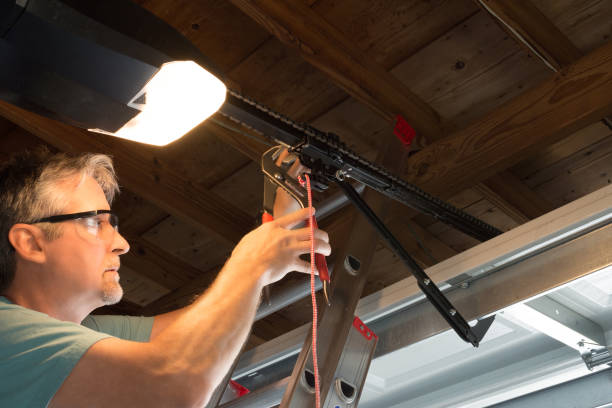
Locate the trolley—this is the moving part that travels along the opener rail and connects to your door via the emergency release cord. You’ll see it has a spring-loaded arm or lever.
Push or pull the trolley back toward the opener motor unit along the rail until you hear or feel it click into place. This reconnects the trolley to the drive mechanism. In some systems, you may need to pull the emergency release cord again (toward the motor) to allow the trolley to re-engage.
Once reconnected, plug your garage door opener back in if you had disconnected it for safety. Test the system by pressing your remote control or wall button. The opener should activate and operate the door normally.
If the door doesn’t respond or the opener runs but the door doesn’t move, the trolley may not have fully engaged. Try the reconnection process again, ensuring you hear a distinct click. Some modern openers have specific reconnection procedures outlined in their manuals, so consult your owner’s manual if you’re having difficulty.
Run several open and close cycles to ensure everything is working smoothly. The door should move at its normal speed without jerking or making unusual noises. While learning how to safely open a stuck garage door, it’s also a good idea to take steps that prevent noisy garage doors in the future, keeping your system running smoothly and quietly.
Prevent Getting Locked Out Again
Taking preventive measures now can save you from the frustration and inconvenience of getting locked out in the future. Several simple upgrades and maintenance practices can provide backup access to your garage.
Install an exterior emergency release kit if your door doesn’t currently have one. This is the single most important upgrade for preventing lockouts. These kits are available from most garage door manufacturers and hardware stores. Installation typically takes less than an hour and requires basic tools. Having this external access point means you’ll never be completely locked out as long as you have the key.
Add a wireless entry keypad for backup access. These keypads mount outside your garage near the door and allow you to open the door by entering a PIN code. This provides access even if you’ve lost your remote or keys. Modern keypads are weather-resistant and can store multiple user codes, making them convenient for family members and service providers. Models with battery backup will continue working during power outages.
Upgrade to an opener with battery backup if power outages are common in your area. These openers have built-in rechargeable batteries that automatically take over when household power fails, allowing normal operation of your door during outages. This feature eliminates the need to manually open the door during storms or grid failures.
Keep a spare emergency release key in a secure but accessible location outside your garage. Consider giving one to a trusted neighbor or family member who could help in an emergency. Never hide keys in obvious locations like under doormats or in fake rocks—these are the first places intruders check.
Regularly test and maintain your emergency release system. At least twice a year, test your emergency release by disconnecting the door and manually opening it. This ensures the mechanism works smoothly when you need it. While testing, apply lubricant to the release lever and check that the cord is securely attached.
Lubricate all moving parts of your garage door system every six months. Use a silicone-based garage door lubricant on the tracks, rollers, hinges, and springs. Proper lubrication prevents many of the issues that can cause doors to stick or jam. Pay special attention to the bottom weather seal, which can dry out and crack over time.
Schedule annual professional maintenance for your garage door system. A qualified technician can identify potential problems before they leave you locked out, adjust spring tension, align tracks, and ensure all safety features are functioning properly. While knowing how to safely open a stuck garage door is crucial, regular garage door spring maintenance tips can help prevent jams and extend the life of your door.
When to Call a Professional
While many stuck garage door situations can be safely handled with the methods described above, some scenarios absolutely require professional intervention. Knowing when to call a local garage door repair in Brisbane can prevent injury, avoid costly damage, and ensure your system is properly repaired.
Broken springs or cables are the most common situation requiring immediate professional help. These components are under extreme tension and can cause serious injury if they snap while being handled improperly. If you see a broken spring (it will have a visible gap in the coil), frayed or broken cables, or your door is extremely heavy to lift, do not attempt to use it. Garage door spring replacement requires specialized tools and training.
Malfunctioning opener motor issues that go beyond simple power problems need expert diagnosis. If your opener makes burning smells, produces excessive noise, or runs but doesn’t engage the door, the motor or drive mechanism may have failed. These repairs require knowledge of electrical systems and mechanical components.
Missing or broken emergency release system should be addressed by a professional if you’re not comfortable installing one yourself. While the installation is not overly complex, it requires drilling into your garage door and proper placement to ensure the system works reliably and doesn’t compromise your door’s structural integrity.
Damaged or misaligned tracks can cause your door to bind, become crooked, or even fall. If you notice bent tracks, loose mounting brackets, or rollers that have come out of their guides, professional realignment is necessary. Attempting to straighten tracks yourself can make the problem worse and create safety hazards.
Manual lifting feels unsafe or too heavy is a clear sign to stop and call for help. If you have physical limitations, back problems, or simply don’t feel confident manually operating your garage door, there’s no reason to risk injury. Emergency garage door technicians are available 24/7 in most areas for lockout situations.
Recurring problems that keep coming back despite your best troubleshooting efforts indicate underlying issues that need professional diagnosis. If your door repeatedly sticks, your opener keeps failing, or you’re getting locked out frequently, a comprehensive inspection by a qualified technician can identify root causes and provide lasting solutions.
Professional garage door technicians have specialized training, proper tools, and liability insurance that protects you and your property. While their services come at a cost, it’s money well spent for situations where safety is at risk or problems are beyond typical homeowner capabilities.
If your garage door is stuck and won’t open from the outside, contact a certified garage door repair service for fast, reliable emergency access and repair solutions. Professional technicians can safely handle spring replacements, track repairs, and opener issues that are too dangerous for DIY approaches.
FAQs
How can I tell if my garage door has an emergency release?
Most garage doors manufactured after 1990 have an emergency release system installed. To verify, look for a red cord hanging from the opener rail inside your garage—this is the internal release. For external access, check the top center of your garage door’s exterior for a small lock cylinder, typically about an inch in diameter. If you don’t see either of these, your door may not have an emergency release system, or it may be hidden behind a panel. Check your door’s installation manual or contact the manufacturer with your door model information.
Can I open my garage door without a key or remote?
Yes, but your options depend on your door’s configuration and available access points. If you have an external emergency release lock but no key, a locksmith can help. If your garage has a side door or accessible window, you can enter that way and use the internal emergency release cord. Wireless keypads provide code-based entry without needing a physical key. However, if your door has no emergency release system and all other access points are locked, professional garage door service may be your only option to avoid damaging your property.
Is it safe to manually lift a garage door alone?
A properly balanced garage door with functioning springs should be relatively easy to lift manually and is generally safe for a single person in good physical condition. However, if the door feels extremely heavy, you should not attempt to lift it alone—this indicates broken or disconnected springs, making the door dangerous. Doors typically weigh 150-400 pounds, so proper lifting technique is essential. Bend at your knees, use both hands, lift with your legs, and keep your back straight. If you have any doubts about your physical ability or the door’s condition, ask for assistance or call a professional.
How do I re-engage the opener after manual release?
First, close the door completely. Then, locate the trolley (the part that slides along the opener rail) and push it back toward the motor unit until you hear it click into place. This reconnects the trolley to the drive mechanism. Alternatively, some systems require pulling the emergency release cord toward the motor to allow re-engagement. Once reconnected, test the opener with your remote or wall switch. The door should operate normally. If the opener runs but the door doesn’t move, the trolley hasn’t fully engaged—try the process again. Consult your opener’s manual for model-specific instructions if needed.
How much does professional garage door unlocking cost?
Professional lockout service costs vary depending on your location, time of day, and the complexity of access. During regular business hours, expect to pay between $75 and $150 for a standard service call to unlock your garage. After-hours emergency calls may cost $150 to $250 or more. If the service reveals additional problems like broken springs or damaged openers requiring repair, those costs are separate and can range from $150 to $500 depending on the specific issue. Some garage door companies include the service call fee in the repair cost if you proceed with their recommended repairs. Always ask for a quote before authorizing work.
This guide is for informational purposes only. Always prioritize safety and consult with qualified professionals when dealing with garage door systems, especially when springs, cables, or electrical components are involved. Regular maintenance by certified garage door technicians can prevent most emergency situations and extend the life of your garage door system.
